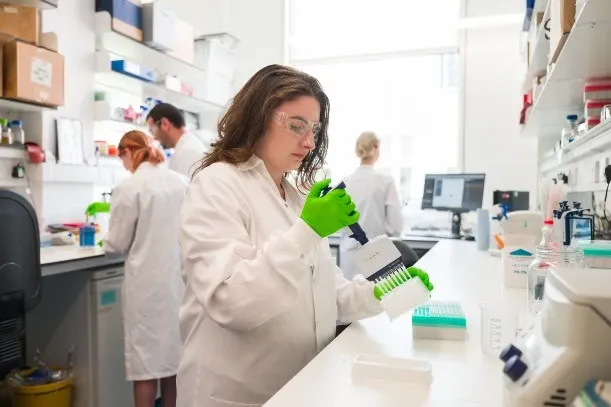
We take a look at some of the exciting diabetes research developments announced in May 2026, and what the findings could mean for people living with or affected by diabetes.
In this month's article:
- Extra clues from the body could help predict risk of type 2 diabetes
- Home blood test could speed up type 1 diabetes immunotherapy research
- Hot weather could increase risk of hypos
Extra clues from the body could help predict risk of type 2 diabetes
New research suggests that combining different types of biological data with existing risk tools could improve how accurately we predict a person’s chance of developing type 2 diabetes.
Understanding risk is key to preventing type 2 diabetes, but current tools don’t tell the whole story. Adding extra clues from the body - particularly blood proteins - could help identify people at higher risk sooner and strengthen prevention efforts.
Type 2 diabetes doesn’t have a single cause. Instead, risk builds over time through a combination of different factors.
There are already ways to estimate someone’s risk, including tools that use information like age, weight and family history, such as Diabetes UK’s Know Your Risk tool. These can help identify people who may benefit from early support. But these approaches don’t fully capture the complex changes happening in the body before type 2 diabetes develops. Researchers are now exploring what extra clues could help build a clearer picture and move us closer to precision prevention – tailoring support and interventions to an individual’s specific level of risk.
To explore this, researchers analysed data from more than 42,000 adults in the UK Biobank - a very large UK database of health information from around half a million people, including information like blood samples and genetic data.
They followed people’s health over 10 years to see who went on to develop type 2 diabetes. They then went back and tested how well existing risk tools identified those who developed the condition - and whether adding extra biological information, including proteins, small molecules in the blood and genetic risk, would have helped spot them earlier or more accurately.
All approaches improved how well researchers could identify who went on to develop type 2 diabetes, but adding blood proteins to existing risk tools made the biggest difference. While combining all the data gave the most accurate results, it added little beyond proteins alone. This suggests that measuring specific proteins could be a simpler way to identify people at higher risk earlier.
But there are still a few roadblocks. The findings will need to be tested in more diverse populations before they can be widely used. And there are also practical challenges such as the cost and difficulty of measuring these markers currently in healthcare systems like the NHS.
Even so, the results point to a promising way forward. In the future, research like this could help identify people earlier and support more precise prevention of type 2 diabetes, where understanding someone’s individual biology could shape how their risk is managed.
Home blood test could speed up type 1 diabetes immunotherapy research
A new study, co-funded by Diabetes UK and Breakthrough T1D, suggests that a simple home blood test could make it easier and quicker to study new treatments for type 1 diabetes that address its root cause.
The research looked at a different way of measuring C-peptide. This is a marker that shows how much of its own insulin the body is still making. C-peptide is crucial in research into immunotherapies, which aim to slow or stop the immune attack behind type 1 and protect insulin-making beta cells.
Tracking C-peptide in trials helps researchers understand how quickly these cells are being lost, and whether new treatments are successfully preserving them.
At the moment, the gold standard test for C-peptide involves a hospital visit and a lengthy procedure known as a mixed-meal tolerance test. This can be time-consuming and demanding for people taking part in research. And it’s only carried out a set time points, making these trials slow to run.
In this study, our researchers from our Type 1 Diabetes Research Consortium, led by Professor Colin Dayan, used data from the USTEKID trial. The trial tested an immunotherapy with children soon after their type 1 diagnosis, with the aim of preserving their remaining insulin production.
Alongside standard C-peptide testing, participants collected small blood samples at home using a simple finger-prick test, creating what are known as dried blood spots.
Researchers found that repeated measurements taken this way, particularly after eating, could reliably track changes in C-peptide over time and detect changes in insulin production earlier than the current test. Differences between participants receiving the immunotherapy and those receiving a placebo could be seen after around 20 weeks using home testing, while the standard method didn’t clearly show this until around a year into the trial.
Being able to measure C-peptide more easily, more often, and detect whether a treatment is working sooner could be a major step forward for immunotherapy research. It could speed up clinical trials, allowing promising treatments to move through the research pipeline quicker and reach people with or at risk of type 1 diabetes sooner.
The study also compared this approach with another simpler test using urine samples. But they found that dried blood spot testing was better at picking up early changes, highlighting it as a more useful option for future immunotherapy trials.
We now need more research to confirm how well this approach works across different groups and settings before it can be widely used. But this comes at an exciting time for type 1 diabetes immunotherapy.
The first treatment – teplizumab – has been licensed in the UK and is currently being assessed for use in the NHS. And many more type 1 immunotherapies are being developed and tested for people at different stages of the condition. Research like this could help make sure promising new therapies follow in teplizumab’s footsteps, and make a difference to people’s lives, as soon as possible.
Hot weather could increase risk of hypos
May was a scorcher in much of the UK, and a new study suggests higher temperatures like this are linked to a higher short-term risk of hypos in people living with type 1 diabetes.
In their study published in Diabetes Care, researchers from Brighton, London, and South Africa analysed nearly 33 million blood sugar level readings from 679 adults living with type 1 diabetes using continuous glucose monitoring (CGM). They compared these readings with local temperature data to look for links.
They found that:
- people’s hypo risk increased as temperatures did, starting when they rose above 13°C;
- hotter days appeared to have the biggest impact. For example, people with type 1 diabetes were 26% more likely to experience hypos at 25°C than on cooler days;
- the heat had the strongest effect on hypo risk on the same day as the hot weather, with the effect decreasing over the next few days;
- warmer temperatures were linked to lower average blood sugar levels – not just more hypos;
- cold weather (around 0°C) increased hypo risk but less strongly than heat.
Researchers think hot weather can affect the way the body responds to insulin. In higher temperatures, blood flow to the skin increases. This can make insulin absorb faster, potentially making blood sugar levels drop more quickly.
These findings back up clinical advice already given, to do more frequent blood sugar checks in higher temperatures.
The results highlight that some people could benefit from adjusting their insulin doses during hot weather, with support from their diabetes team. And they suggest that hybrid closed loop technology could work better if it factored in temperature when adjusting insulin based on blood sugar levels.
Larger studies are needed in different climates, involving people from different ethnic groups, and those who use differing insulin delivery methods - like insulin pumps vs daily injections. But this is the first study to use individual people’s CGM data to explore how heat impacts daily patterns in blood sugar levels.
While not everyone will be affected in the same way, as UK summers become warmer and heatwaves more frequent, taking simple steps like checking sugars more regularly, keeping hypo treatments close by, and speaking to your diabetes team about possible adjustments could help reduce the burden of hypos.