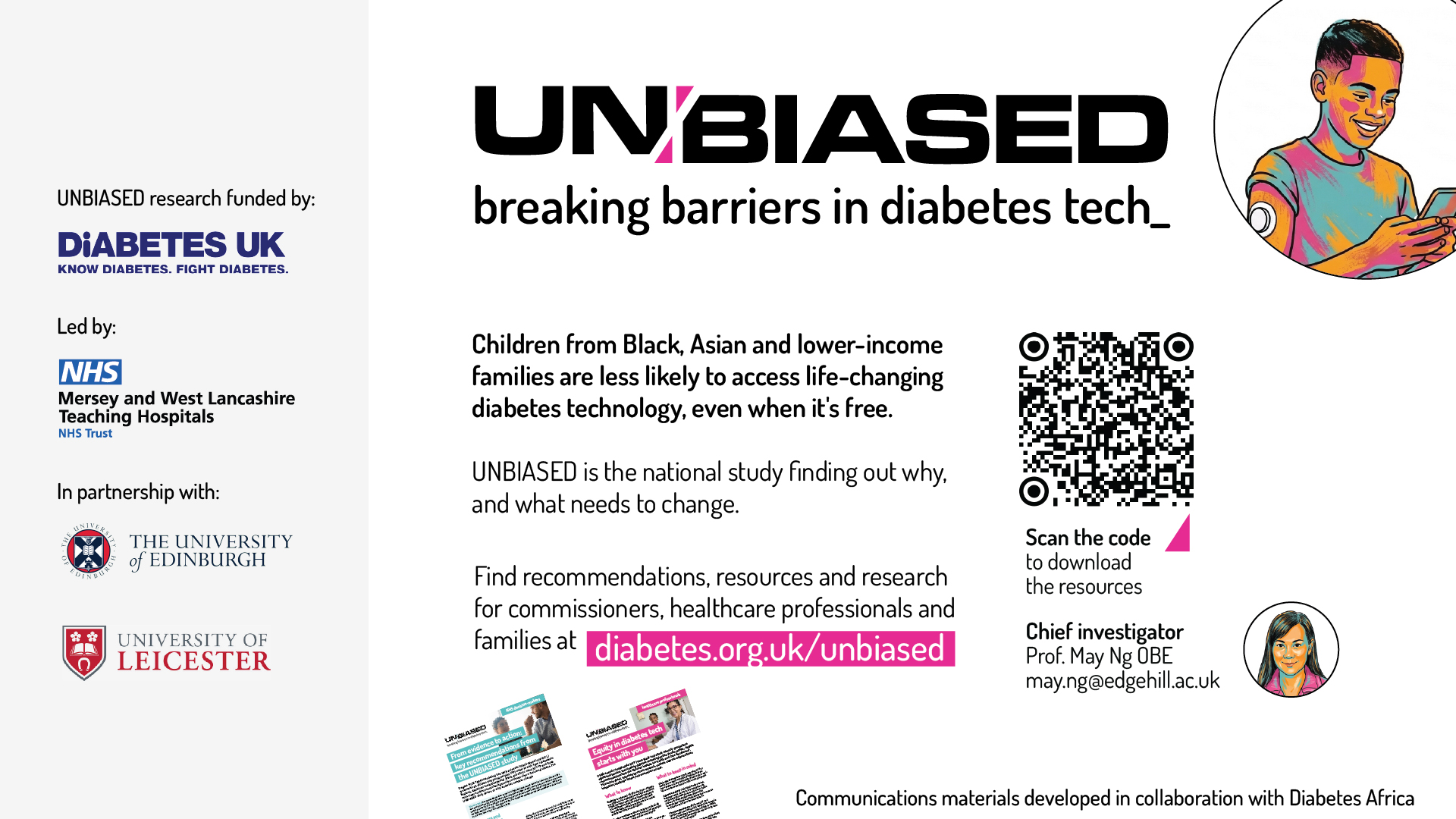
The UNBIASED study, funded by us here at Diabetes UK, sheds light on barriers that prevent some children and young people with type 1 diabetes from accessing or effectively using diabetes technology. And practical solutions to help make sure every child gets the support and tools they need.
More and more children and young people with type 1 diabetes in the UK are now using diabetes technology, like continuous glucose monitors (CGM), insulin pumps and hybrid closed loop systems. This tech can make managing blood sugar levels easier, safer, and give children more freedom to live their lives.
We’ve seen huge progress in access to tech and reductions in inequity in recent years. This is thanks to landmark policy changes, as well as sustained efforts by the NHS and partners to identify and tackle systemic barriers to access.
We welcome reductions in ethnicity and deprivation related gaps and support ongoing work to ensure the life-changing benefits of tech reach everyone equally.
Children and young people from some ethnic minority backgrounds, particularly those of Black heritage, and those in more disadvantaged communities have historically had lower rates of tech use. They also continue to experience higher average blood sugar levels than their White and more affluent peers. We look forward to further progress and closing these gaps for good.
The UNBIASED study
To explore why some children and young people face additional barriers to accessing or using diabetes tech – and what could help overcome them – we funded the UNBIASED study, led by Chief Investigator Professor May Ng OBE at Edge Hill University and Mersey and West Lancashire Teaching Hospitals.
Children from ethnic minority backgrounds or deprived areas, and their families, told the researchers about the challenges they face and what they think could help. While Healthcare professionals also shared their perspectives and ideas.
What needs to change: key recommendations
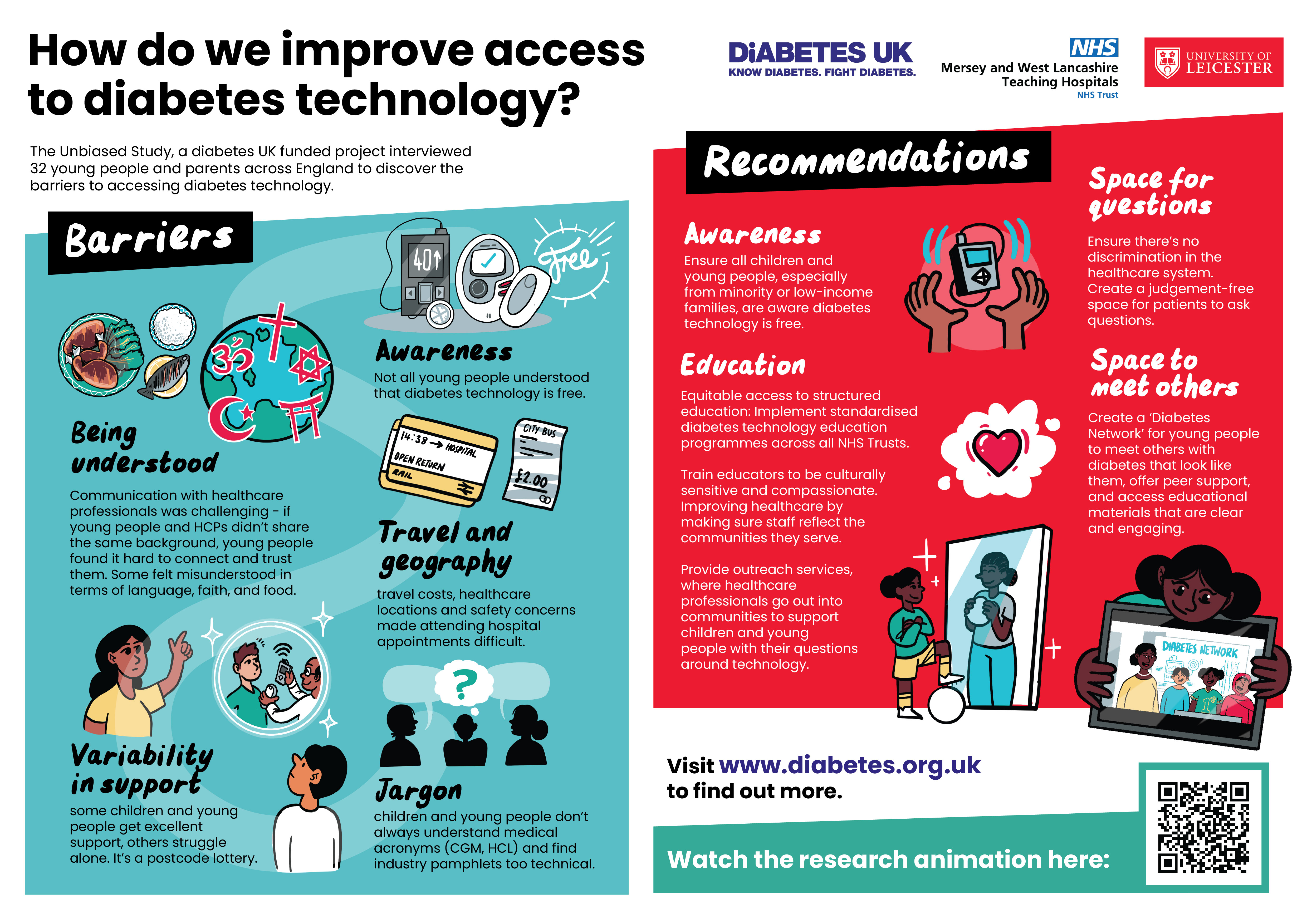
The UNBIASED study identified practical actions that can help reduce inequalities in access to diabetes technology. Drawing on insights from families and healthcare professionals, the recommendations highlight the importance of clear communication about entitlement, accessible and culturally relevant information, and stronger support within services and communities.
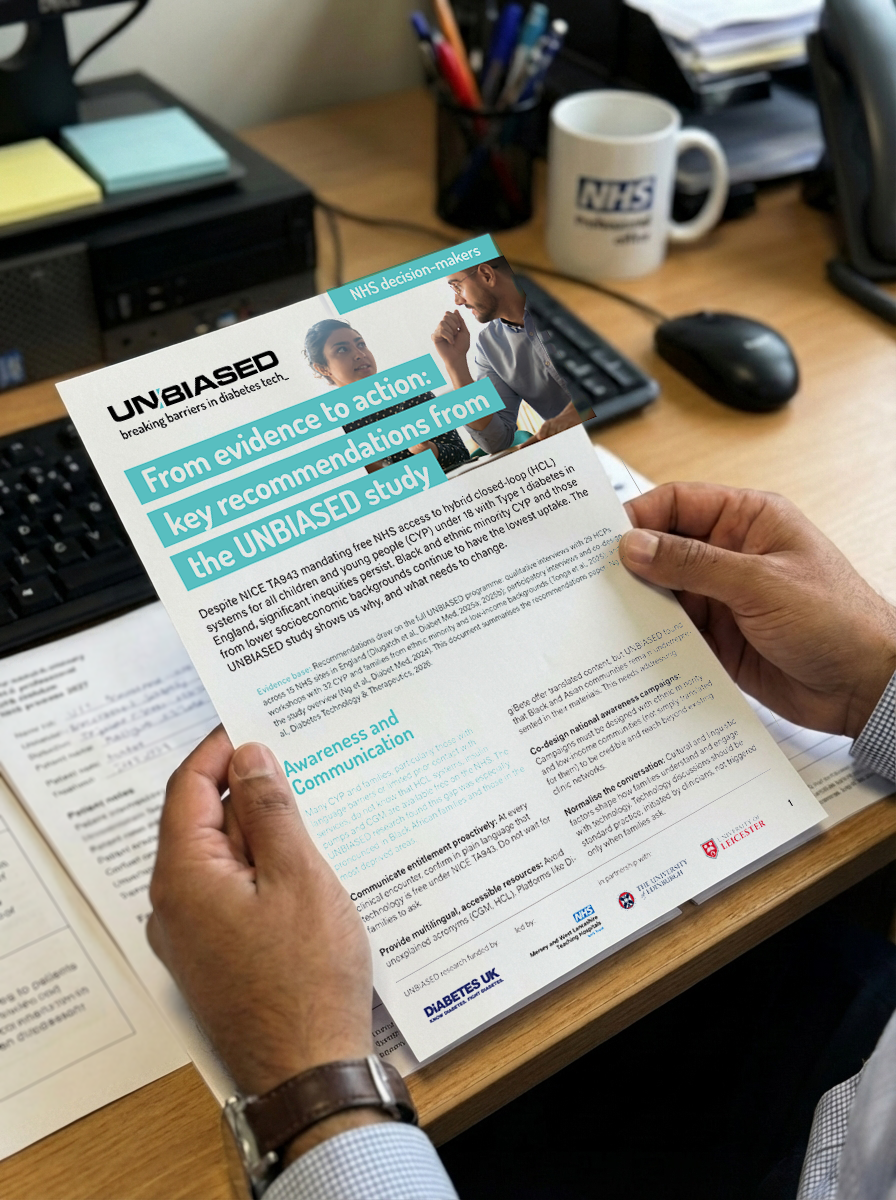
These are brought together in UNBIASED's key recommendations and resource for healthcare professionals, which outline what can be done in practice to support more equitable access.
Overcoming barriers
Children, young people and families described a range of challenges, including not knowing that technology is available for free on the NHS, difficulties with language and communication, and uncertainty about how tech works in everyday life.
Healthcare professionals also highlighted pressures within services, including limited time and variations in how access is supported locally.
Watch the videos below to hear about the barriers and practical changes that can help overcome them.
Further resources
Explore these shareable and practical resources to find out more about the UNBIASED study’s findings and recommendations.
- Slide to share the UNBIASED study link with colleagues
- UNBIASED key recommendations
- Resource for healthcare professionals
- Resource for families
- Infographic summary of children and young people’s barriers and recommendations
Publications
- Bridging the digital divide: The UNBIASED national study to unravel the impact of ethnicity and deprivation on diabetes technology disparities in the United Kingdom. (PDF download)
- Understanding inequities in access to diabetes technologies in children and young people with type 1 diabetes: Qualitative study of healthcare professionals' perspectives and views. (PDF download)
- Improving access to diabetes technologies in children and young people with type 1 diabetes: Healthcare professionals' perspectives and views. (PDF download)
- Recommendations from the United Kingdom UNBIASED Study to Address Diabetes Technology Access Disparities for Children and Young People. (PDF download)
- Exploring inequities in access to diabetes technologies among children and young people with type 1 diabetes: Perspectives of parents and young people from ethnic minority groups and low socio-economic areas. (PDF download)
- Co-design of an animated resource to understand inequities in access to diabetes technologies among children and young people with type 1 diabetes from ethnic minority groups and/or low socioeconomic areas. (PDF download).
Acknowledgements
The UNBIASED study was led by Chief Investigator May Ng, with the investigator team including Julia Lawton, Natalie Darko, Mark Evans and Nick Oliver. We thank the children and young people, parents and carers, healthcare professionals, and wider collaborators who shared their time, experiences and insights.
Getting the support you need
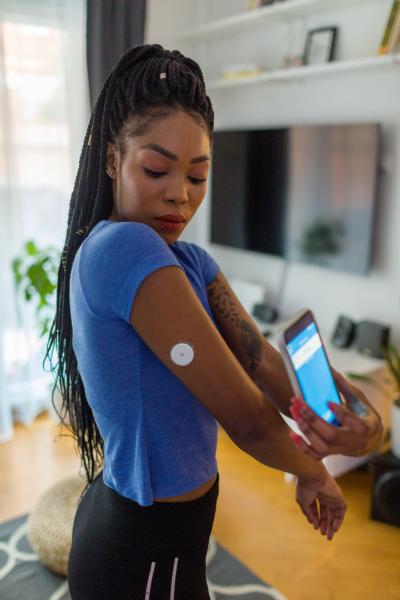
- The tech you're entitled to: UNBIASED resource for families
- If you’re aged 11-25 and living with type 1 diabetes, you can join our Together Type 1 community to connect with other young people and get support if you’re struggling to get or make best use of diabetes tech.
- You can talk to a trained advisor on our helpline for information and advice on diabetes tech, or just to have a chat.
- Head over to our online forum to join hundreds of members talking about their experience with diabetes tech. You can ask questions or read conversations between existing members.
- Join Diabetes UK’s free Learning Zone for personalised advice, top tips and ongoing support.
- Read about the different types of diabetes technology and what you can get on the NHS.
What’s next?
The UNBIASED team hope their practical recommendations can support the NHS to break down the remaining barriers and ensure that every child and young person with type 1 diabetes can access and effectively use the tech they need to thrive.
Tackling Inequity is a pillar of our strategy here at Diabetes UK. As the rollout of diabetes tech continues, equality and fairness must stay at the heart of progress. We’ll continue to monitor access and health outcomes closely, staying alert to any new barriers that appear, as others are overcome, to make sure no one is left behind.