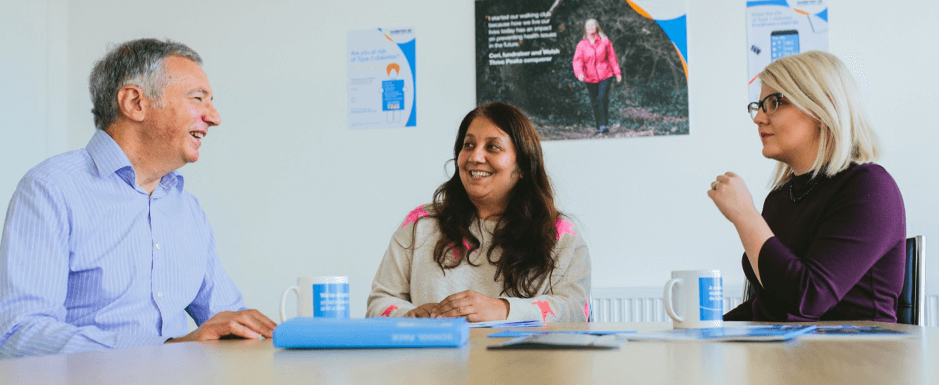
We want to give you a seat at the table, to make sure research is done in partnership between people affected by diabetes and scientists.
That’s why we want to hear from you on the biggest issues you face and the areas where you want more research to happen. We’ll make sure scientists listen and use your views to decide what they’ll focus on next.
Diabetes Research Steering Groups
Our Diabetes Research Steering Groups (DRSGs) bring together people affected by diabetes with researchers and, healthcare professionals to pinpoint precisely where more research needs to happen, so we can make the greatest possible difference to the lives of people with diabetes.
Grants Advisory Panel
Our Grants Advisory Panel (GAP) gives you the opportunity to review the research applications we receive from scientists and help decide which projects we fund.
Currently we are looking to recruit people for our panels and groups to help us improve the representation of:
- People from Black, Black British, Caribbean or African backgrounds
- People from Asian or Asian British (for example Indian, Pakistani, Chinese) backgrounds
- People from Arab (for example Egyptian, Moroccan, Saudi Arabian) backgrounds
Find out more, or complete this form if you want to get involved.
Science and Research Advisory Group
Our Science and Research Advisory Group (SRAG) allows you to make recommendations to the Board of Trustees on areas in which the charity should focus its research effort and ensure that we are delivering on goals set out in our research strategy.
T1D Expert by Experience Advisory Panel
Our T1D Expert by Experience Advisory Panel involves you in the work of the Type 1 Diabetes Grand Challenge. This game-changing partnership between Diabetes UK, Breakthrough T1D and the Steve Morgan Foundation is investing £50 million into research that will fast-track progress towards new treatments and a cure for type 1 diabetes. You’ll support the lived experience review of the progress of the Translational Programmes, and also help to make sure that outputs from the Grand Challenge are relevant and accessible to people with type 1 diabetes, from supporting the development of Grand Challenge communications through to helping to organise the Type 1 Diabetes Grand Challenge Symposium.
Why make your voice heard
- You could get a say in where research funding is spent.
- You can use your expert experience of diabetes to make sure research addresses the issues that matter most to people living with the condition.
- You could help to improve the quality and likely success of research by advising scientists on the design of their studies.
“For me it’s very emotional to be part of the process of making sure researchers and policymakers are really hearing what people affected by diabetes are facing. It’s about being part of a conversation and making sure that researchers actually hear what’s happening on the ground level and the experiences of friends, family and the wider community.”
Your voice shaping research
Involving people affected by diabetes in our research and listening to their experiences and concerns has already influenced our research work and led us to do more in vital areas, including:
- Tackling diabetes stigma
- Developing new approaches to putting type 2 diabetes into remission
- Understanding how to help people age well with their diabetes
- Improving care for people with diabetes and eating disorders
- Preventing diabetes distress and mental health issues
- Preventing and treating early-onset type 2 diabetes
- Fast-tracking new treatments and cures for type 1 diabetes
- Slowing progression of diabetes complications
- Addressing unfair gaps in children and young people’s access to diabetes tech
- Preventing sight loss.