Below are stories from members of our community who wanted to add their voice to show why awareness of the 4Ts, the symptoms of type 1 diabetes, is so important. Together we want to make sure everyone knows the symptoms to look out for, Toilet, Thirsty, Tired and Thinner.
These stories are powerful, emotional and difficult – touching on aspects of how the 4Ts were spotted, children who were diagnosed in diabetic ketoacidosis (DKA), and heartbreakingly, families who lost their children to undiagnosed type 1 diabetes. We are incredibly grateful to them for sharing their experiences.
If you are affected by the topics highlighted within these stories, you can access support from our helpline team on 0345 122 2399, Monday to Friday, 9am to 6pm, or email helpline@diabetes.org.uk. And if you spot any of the 4Ts in you or your child, contact your GP immediately and ask them to complete a finger prick blood glucose test. Or call 111 for advice if your GP surgery is closed, or go straight to A&E if your symptoms are getting worse.
John: “Type 1 diabetes is life changing, but it should never be life ending.”
“Lyla was our bright and beautiful girl, with a personality that filled every room she entered. She was full of life. Just three weeks after her second birthday, she became unwell with what seemed like a common childhood illness. But less than 24 hours after being diagnosed with acute tonsilitis, she was gone. Lyla had also been displaying the 4Ts symptoms including extreme tiredness, increased thirst and more wet nappies, but her type 1 diabetes was not diagnosed.
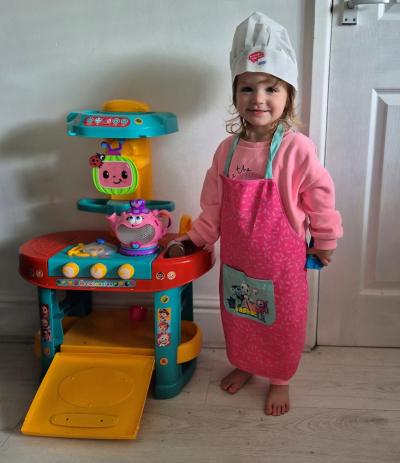
“Losing Lyla shattered our world. She was only two years old but had already left a mark on everyone who met her. She continues to do so as we carry her light forward, determined to ensure no other family experiences the devastating loss that we have.
“When a person is presenting with any one of the 4Ts, it’s a ticking timebomb and every minute matters. A simple finger-prick blood glucose test can save a child’s life. When I speak about Lyla, I remember her for the girl she was, but I also carry the weight of knowing her story can save others. Type 1 diabetes is life changing, but it should never be life ending.”
Donita: “I remember the symptoms developing quite gradually.”
“I was diagnosed with type 1 diabetes at the age of 11, which came as a significant shock, particularly for my mum, as I was the only person in our family living with the condition. I remember the symptoms developing quite gradually. It started with bedwetting and not recognising when I needed to go to the toilet. I had just started secondary school and was really excited about this new chapter in my life.
“At school, I also remember feeling incredibly thirsty. We had what was known as a ‘Tuck Shop’, and I would be drinking cans of fizzy drinks, but I just couldn’t quench my thirst. I was also feeling extremely lethargic and found myself falling asleep at every opportunity. The combination of these symptoms really worried my mum and she took me to the GP, who carried out a blood glucose test that showed I had diabetes and we went straight to the hospital.
"My mum knew about diabetes, but it wasn’t something that was widely spoken about within our community. Amongst her friends, she didn’t know of any other children living with the condition. I think she questioned whether there was something she had done that might have caused it and felt quite isolated at the time. Even to this day, I don’t know anyone else from my own background who lives with type 1 diabetes. Growing up, my mum, siblings and my immediate family became my community and my support network.
"Looking back, I believe my mum took me to the GP just in time and I think it was a combination of recognising those symptoms and a mother’s intuition that made her realise something wasn’t right. Over the years, and now as an adult, I’ve developed a much deeper understanding of my diabetes and what living with the condition means to me."
Lena: “Looking back, all the signs were there.”
“I was just six years old when I was diagnosed with type 1 diabetes. It was after Christmas in 2008, when I was unwell with a flu which a lot of my classmates had. But I just wasn’t getting any better. Looking back, all the signs were there – I had more than just a flu. I’d lost weight, didn’t have the energy to do anything, and had been wetting the bed. I’d wake up constantly through the night to go to the toilet and even kept a cup of water in the bathroom as I was so thirsty.
“My mam took me to the GP after the Christmas holidays. As soon as she explained my symptoms to the doctor, they asked for a urine sample. I was rushed to hospital in DKA. I had a finger-prick blood glucose test done, as well as further bloodwork.
"My mam still remembers the doctors telling them that if I’d come in any later, it would have been too late. I was terrified. I was admitted to the children’s ward and started on multiple daily insulin injections. Like many people diagnosed at a young age, I don’t really remember life before diabetes. My diabetes team have been fantastic and are still my role models to this day. They inspired me to become a nurse so I could one day support people the way they supported me.
“Diabetes can be relentless – even after 18 years, I’m still learning. It’s been an amazing journey, especially as a Young Leader with Together Type 1 from Diabetes UK. It’s given me the opportunity to meet other people who truly understand life with diabetes. I’ve also had the chance to support campaigns like this which help educate and empower others to know what to look out for. Raising awareness of the 4Ts is so important, as recognising those symptoms early can help lead to a quicker diagnosis and potentially save lives.”
Caitlin: “Then he started calling out for water during the night, so we knew something was up.”
“Our son Jago was diagnosed with type1 diabetes in 2021 when he was 8 years old. He was fit and healthy and there was no history of diabetes in the family, so it came completely out of the blue for us. His initial symptoms were that he seemed thirstier than usual, and he was going to the toilet to wee a lot. Then he started calling out for water during the night, so we knew something was up.
“Luckily, I had some awareness of the symptoms of type 1 diabetes. There had been a Diabetes UK poster about the 4Ts displayed on a door at our younger son’s nursery, which I’d seen every day when I dropped him off. That really stuck in my mind, and I knew his symptoms might mean he had type 1 diabetes.
“The GP did a finger-prick blood glucose test, and the results showed a very high blood sugar level of 18mmol/L. We were immediately referred to the local paediatric team and Jago was admitted for a few days in hospital. We were very lucky that we had caught it early and he wasn't in DKA. A few days later and things could have been very different.
“I’m sometimes haunted by the thought of what might have happened if I hadn’t followed my instincts and specifically asked for a finger-prick blood glucose test. Since then, I’ve read so many stories of children whose diabetes was diagnosed at a much later stage, often when they were critically ill and fighting for their lives in intensive care. I’m now all too aware of just how quickly things can deteriorate when diagnosis is delayed. Jago is now an active 13-year-old and doing really well. He’s independent and become very good at managing his diabetes himself and in general, takes it all in his stride.”
Gareth and Joanne: “We felt so sorry for Gracie having to go through this.”
“Gracie was just shy of two when she was diagnosed with type 1 diabetes in 2018. It all started on Halloween night, where she was dressed up for her first trick-or-treat, but ended up staying home as she felt poorly with a cough. She wet the bed that evening which wasn’t out of the norm, but the next day she was pale, tired and not herself.
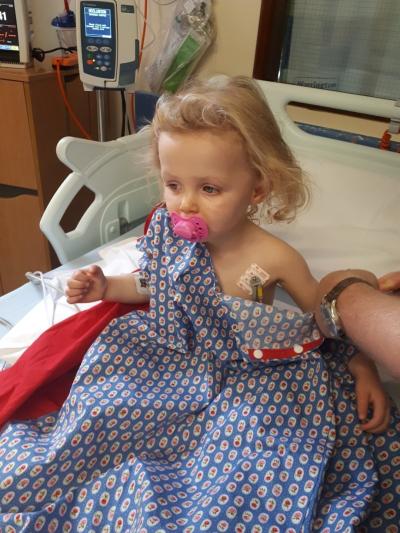
“We noticed she was drinking more than usual that day. She then started being sick and was extremely lethargic the next morning. We knew something was seriously wrong so took her to the GP, who sent us straight to the hospital.
"Gracie continued to be sick during that car journey, and even fell unresponsive. We were met by a team of doctors who did a finger-prick blood glucose test. It showed Gracie had very high blood glucose levels and diagnosed her straight away with type 1 diabetes. We were told that she was in DKA due to severe lack of insulin, which can be fatal. From there, everything was a blur – blood tests, tubes, syringe after syringe of medications. It was a whirlwind, but by next morning she was like a different child – sitting up, eating toast and feeding the fish outside her hospital room.
“We felt so sorry for Gracie having to go through this and guilty for not recognising the symptoms of type 1 diabetes. Nothing prepares you for seeing your little girl unconscious. We’re so grateful that Gracie recovered and has been able to live well with her diabetes. Diabetes UK has supported us at our lowest points of Gracie’s care and have since given her amazing opportunities to advocate for her condition. We’ll always fight for Gracie and others – for better awareness and research that might one day stop other parents feeling like we did when Gracie was diagnosed, or heartbreakingly, potentially losing their child to this condition.”
Clare: “It’s scary to think what could have happened if we hadn’t got her to hospital in time.”
“My daughter Sophie, who was 13 at the time, showed all the symptoms of type 1 diabetes, but we just didn’t realise it. Sadly, I don’t think many people know about the symptoms. Whilst on a family walk, we had taken a bottle of water for the dog and Sophie kept asking if she could have some and I remember thinking at the time, “gosh she’s thirsty.” The following week I noticed she was looking a lot thinner than usual and said to my husband we would need to keep an eye on this.
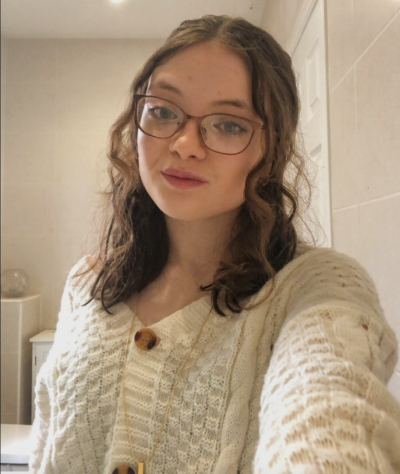
“Weeks later Sophie started feeling very unwell, she became increasingly lethargic, had no appetite, was sick and had become quite weak. It was May 2020, during the first lockdown and seeing a doctor was unlikely. We decided to just keep an eye on her that evening and see if she improved. However, at about 2am Sophie woke me up, her breathing was fast and she had become confused and incoherent and barely able to string a sentence together. The rapid breathing became worse with Sophie’s drowsiness now bordering on her becoming unconscious. So we called 111 for help.
"The ambulance arrived quickly and the paramedics carried out a few tests and measured her blood sugar levels, which were 37mmol/L and she had a very high ketone level. We were told we needed to go to hospital straight away as Sophie had type 1 diabetes and was in DKA. We hadn’t heard of the symptoms of type 1, and we certainly didn’t know anything about DKA.
“Looking back, the 4Ts were there, but type 1 diabetes just wasn’t something we’d ever considered. Sophie, now 19 has always coped really well with her diabetes. She’s remarkable and is holding down a full-time job, been driving for 2 years and has enjoyed many a holiday abroad.”
Hamza: “Having type 1 diabetes doesn’t mean I have to put my ambitions aside.”
“Seven years ago, I was diagnosed with type 1 diabetes, I was just 11 years old. One evening my dad noticed that I was unusually thirsty and drinking more water than normal. We went straight to the hospital, it was around midnight, and everything happened very quickly. By the following morning, I was diagnosed with type 1 diabetes and spent the next few days in hospital. Following my diagnosis, I had some time off school, and I don’t think I fully understood what having type 1 diabetes would mean for the rest of my life.
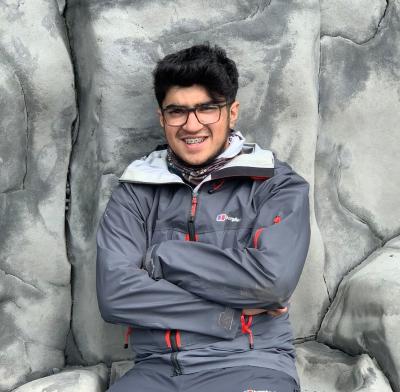
“Diabetes technology has made a huge difference to my life, giving me much greater flexibility and helped me better understand how my body responds to different activities, foods, and exercise. I like to keep active, whether that’s going to the gym, cycling long distances or challenging myself physically. Living with type 1 diabetes doesn’t define me or limit what I’m capable of achieving.
“Talking about my diabetes is one of the best ways to raise awareness, especially in my community and help people understand what living with diabetes is really like. I don’t see it as something I should hide or feel embarrassed about. Being part of the Diabetes UK Youth programme, Together Type 1, is really important to me. There’s something quite special about being surrounded by young people who understand what living with type 1 diabetes is actually like, without explaining every little detail. Ultimately, I want to help show that type 1 diabetes is something we live with, not something that should stop us from living.”
Jayne: “I thought I’d never get my little girl back, but she’s here and diabetes is part of our lives now.”
“Libby was diagnosed with type 1 diabetes in December 2019, she was just 3 years old. Everyone in the family had had a bit of a cold so I assumed that was the same with Libby. When she’s unwell, she always pushes through but this time she wasn’t really picking up.

“I’m not one to go straight to the doctors but I mentioned to my mum that she’d been really thirsty, and she said it could be symptom of diabetes, which I shrugged off as I didn’t have a clue what that was. But I googled the symptoms and thought I ought to get her checked.
“In the morning, I took her to the doctors, I thought she looked really thin. She had also been really lethargic. I took a urine sample to the doctor who did a test there and then. She said Libby had a lot of glucose in her wee and sent us straight off to A&E. And that's when we got her type 1 diagnosis. Libby was injected with insulin there and then and we were moved onto a ward where we ended up staying for four nights. We didn't know what diabetes was. So it was doing research – finding out everything about it. Everything about our daily lives got flipped upside down.
"Libby is now thriving, she’s happy and the diabetes technology makes things a lot easier for her. She really enjoys sport and attends gymnastics and swimming, things I thought she would never do with ease. As a family, we are miles away from those newly diagnosed days. We now know Libby is going to be ok.”
Reach out for support
If you'd like to get in touch with us, you can share your story and access support from our helpline team on 0345 122 2399, Monday to Friday, 9am to 6pm, or email helpline@diabetes.org.uk.
You can also join our free support forum – to connect with others affected by diabetes (minimum age 13). For more information, see our forum FAQs.