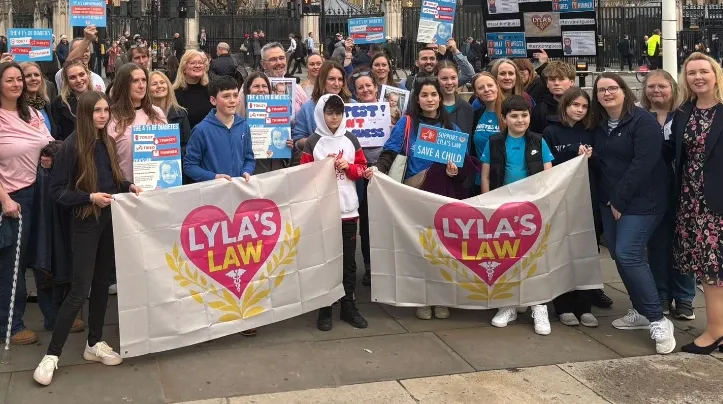
On Monday 9 March 2026, a debate in Westminster on Lyla’s Law shone a powerful light on the need for earlier diagnosis of type 1 diabetes in children.
Two-year-old Lyla Story died in her sleep in May 2025, hours after receiving a diagnosis of acute tonsillitis, even though she presented with symptoms linked to type 1 diabetes, such as extreme tiredness, increased thirst and more wet nappies.
Lyla’s father, John Story, has since campaigned tirelessly across all levels of the health system. His call for a ‘test, don’t guess’ approach has resonated strongly across the type 1 community, where delayed diagnosis has been a long-standing concern.
More than 120,000 people signed the petition set up in Lyla’s memory, which Lyla’s parents handed in to Downing Street on Monday. The petition calls for increased use of finger-prick tests in healthcare settings whenever someone presents with the 4Ts, the most common symptoms of type 1 diabetes: Toileting, Thirst, Tiredness and Thinner.
We stand with the Story family to call for greater education and awareness of the 4Ts and for improved testing to ensure no other families face such a devastating loss.
The strength of support from the wider type 1 community is evident, more than 2,000 people wrote to their MP about the debate, using our online tool to share their own stories, and on the day, the public gallery was full. Thank you to everyone that has supported the campaign, by contacting their MP or travelling to attend the debate.
More than 25 MPs attended the debate, with many sharing their own personal experience of type 1 diabetes or referencing the heartfelt stories of their constituents. Many of these experiences echoed Lyla’s, with parents describing how they had to fight for their child to receive a simple finger-prick test.
Ruth Jones MP shared the story of Beth Baldwin, who attended the debate. Beth’s son, Peter, tragically died in 2015, at just 13 years old, as a result of undiagnosed type 1 diabetes.
Minister Sharon Hodgson responded on behalf of the government, thanking Lyla’s parents for their passionate and powerful campaigning and saying “no child or their family should be let down in this way”.
She highlighted work the NHS is doing to improve awareness of the 4Ts, particularly amongst healthcare professionals and spoke about John Story’s work with NICE to update their guidance on testing for type 1 diabetes. She also spoke about the potential to use Electronic Patient Records to flag type 1 diabetes when symptoms are added to someone’s notes.
We welcome the Minister’s commitments to these concrete actions that will help improve the situation, but further steps are needed to ensure symptoms are recognised earlier and children receive timely diagnosis and care.
No child should die or become seriously ill simply because the signs of type 1 diabetes were missed. We look forward to working with the Lyla’s Law campaign, as well as with Government and NHS leaders to secure further change.