Page saved! You can go back to this later in your Diabetes and Me Close

Bruce’s story: Living life to the fullest after experiencing complications

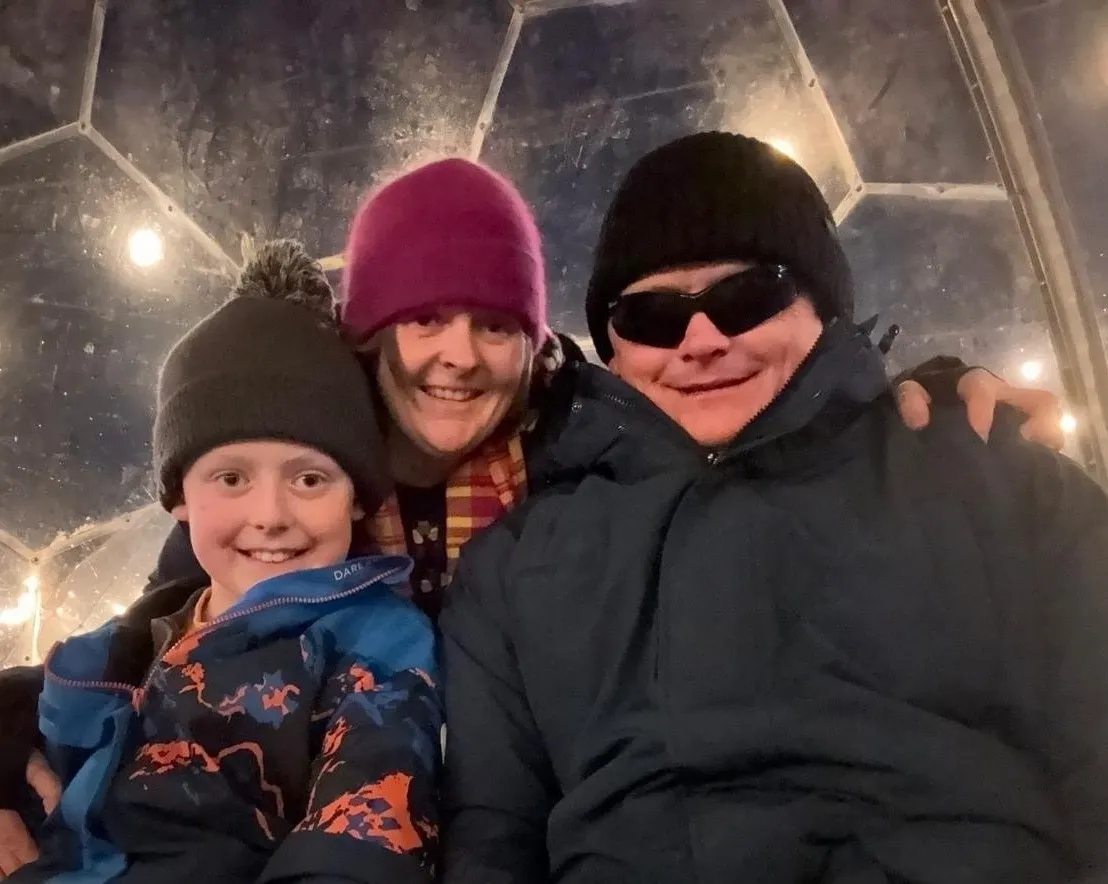
Bruce pictured at a Christmas even with his wife and young son. They are wrapped up in winter wear and there are fairy lights lit in the background.

Bruce

"As I learned to adapt to my new life, I found purpose in helping others who may also be struggling."

Bruce is a peer mental health practitioner who lives in Moray, Northeast Scotland, with his wife, son, and guide dog. Diagnosed with type 1 diabetes at the age of five, Bruce shares his story of adjusting to life after experiencing diabetes-related complications, including sight loss, to help others who may be struggling to adapt to similar life changes. 

Diagnosis

My symptoms

When I was five, my mum noticed I’d started sleeping more, drinking more and running to the bathroom more – essentially, I was showing most of the 4Ts. She acted quickly, taking me to our local GP with a urine sample to be tested. I also had my blood sugars tested which were quite high, so I was very quickly taken to our local hospital where I was diagnosed with type 1 diabetes. I spent the following two weeks getting to know my diabetes team.

Back then, insulin was given using vials and syringes where you had to draw up the insulin yourself. I remember the nurse saying, ‘I’m going to do this for you once and then it’s up to you.’ It hurt quite a bit, and I quickly pulled it out of my leg and set it aside. She told me quite bluntly, ‘Well you have two options – you either do the insulin, or you die’. Incredibly abrupt for a young child to hear, but looking back now, I understand the frank truth in it.  

My mum was incredible with managing my diagnosis and care thereafter. When I was just one year old, my father was killed in a tragic car accident, so my mum raised three young children by herself, all while also juggling my diabetes. 

Journey with diabetes

The younger years

Growing up with diabetes wasn’t easy. Early on, I had two great consultants – one of them even came to my school to explain insulin and hypo treatments to my teachers. As a teenager, I became a bit rebellious. 

"Around 16, my mum encouraged me to take more responsibility for my care, reminding me that adulthood was coming. So, I took charge of it, but at this time I was moving from paediatric to adult services and had a bad experience during the first appointment with my new consultant."

He slammed my case notes down and started shouting that I ‘had to do this and had to do that’ etc. Admittedly, I’m quite stubborn, so this didn’t land well with me. I told him I wouldn’t be back, and I didn’t attend appointments for around five years – until he retired. I appreciate that this was around 27 years ago – things have changed massively and there’s a greater emphasis on easing young adults more gently into adult services.

Complications

Trying to get back on track

In my early 20s, I returned to appointments. I had a new consultant and was more willing to listen. She focused on getting me back on track.

But during the years I’d stepped away from my diabetes team and checks, I’d already had multiple hospital admissions. I was diagnosed with diabetic retinopathy and had laser treatment, as well as corrective lenses. 

I did well to get things back on track for a while, but working long hours in agriculture made looking after my diabetes difficult.

I ate whatever I could to keep my energy up, and that took a toll on my blood glucose levels. From here, I had further hospital admissions.

I was around 27 when things started to go noticeably wrong. I had high blood pressure, and I wasn’t aware that I was actually experiencing issues with my kidneys until a letter arrived inviting me to the clinic. It was there that they advised me that my recent checks indicated that my kidneys were failing and that I had 12% function left – I ended up on dialysis at 27 years old.

A short time after in December 2010, I was admitted to hospital because I was retaining some fluid and needed more frequent dialysis. When I was being discharged, I went to meet my now father-in-law, and just as I walked down the stairs of my local hospital, my sight just went like turning off a light switch.

"I knew I had issues with retinopathy as I’d noticed changes with sight since a young age when I’d stepped away from my healthcare appointments. When I re-engaged with my new consultant, I attended my annual checks, but I did have quite noticeable changes, many of which happened in my earlier years."

 I was given laser treatment to help but I don’t think myself or my healthcare team anticipated such rapid deterioration – I hadn’t been prepared for complete sight loss.

Just 12 months later, I received a kidney and pancreas transplant – two life-changing events in such a short space of time. 

Emotions

Living life to the fullest

I still have difficult days living with sight loss, but I consider myself fortunate. I’m naturally laid back, and that has helped me through tough moments. 

"My mentality has always been that I can sit down, or I can get on with it. I still live my life to the fullest – going out, doing various hobbies and spending time with my wife and son."

Oddly enough, losing my sight made me realise there’s far more to life than work and money. We all work ourselves ragged without getting time to sit back and enjoy what we really have.

 "Me losing my sight and getting the transplant has given me the opportunity to sit back and enjoy life for what I have, who I have and what I do with my life. Life is so precious." 

As I learned to adapt to my new life, I found purpose in helping others who may also be struggling. It took me a little while to get back on my feet initially, but I attended college and took on some courses to help me learn how to use a computer sufficiently with screen-reading software. I worked for a sight impairment charity before moving into my current role with a mental health charity in Scotland. 

Treatments

Barriers with technology

Today, I manage my diabetes with a CGM to monitor my glucose levels and administer my own insulin. I was offered a pump in 2025, but it didn’t feel like the right time. Pumps are amazing for people living with diabetes in giving them more independence and reducing their mental load, but due to accessibility and safety, my wife would need to be trained to step in if needed. I understand why, but I’m very independent and headstrong. Tell me I can’t do something, and I’ll probably do it at least once just to prove you wrong.

My wife and I decided to wait and see how technology continues to improve for people with sight loss. I’m very invested in this area and have spent a lot of time researching pumps, speaking with companies, and giving feedback on accessibility features.

Life after my transplant

After my transplant, I didn’t need insulin at first, but that changed over time. In the first six months of going back on insulin, I had my HbA1c down to 43mmol/mol and was just eating my set meals with no treats as such. I was quite strict with my diabetes management to the point that my consultant said I was existing, not living. I had a fear of not managing my diabetes well and having more issues.

Now, I have found better balance. My HbA1c has been around 51mmol/mol for a while. One challenge is that my transplanted pancreas still works to some degree – it still produces insulin, but it’s hard to know how much. Some days it turns into a yo-yo because I’m never quite sure how much my body will give me. 

Life with diabetes

Stigma has many forms

I’ve had people say, ‘Oh you have diabetes, that means you ate too much sugar’ which is frustrating. But honestly, the biggest stigma I faced was from myself. At first, I didn’t want to inject in public because I didn’t want to be judged. Now, I don’t have a care in the world – if I need to do it, I do it.

It’s a full-time job having diabetes, but I’m not doing it alone. I have my wife, my son, and my healthcare team. Medical advancements over the last 25-30 years have been enormous and so significant in helping people living with diabetes feel more supported.

Encouraging others

Diabetes is fascinating and mind-boggling all at once. 

"I hope that by sharing my story, others feel encouraged to reach out for support and learn as much as they can about their condition – be that through friends and family, their healthcare team, or charities like Diabetes UK."

I have found that having a shared space with others has been really helpful – there will be more people than just myself who have had complications or have experienced difficulties over the years from having diabetes. For me, while living with diabetes-related complications can have its really tough days, it has also given me an incredible appreciation for what I do have.

___________________________________________________________________________________________________________________________________________________________________________

Reach out for support

If you are affected by the topics highlighted within this story or other stories on our website, you can access support from our helpline team on 0345 122 2399, Mon- Fri, 9am- 6pm, or email helpline@diabetes.org.uk.

You can join our free Support Forum – to connect with others affected by diabetes (minimum age 13). For more information, see Forum FAQs.

For those aged 11-25 living with type 1 diabetes, check out our youth programme Together Type 1 for a supportive community of people who understand what it’s really like juggling the ups and downs of life with diabetes. 

Back to Top
Brand Icons/Telephone check - FontAwesome icons/tick icons/uk