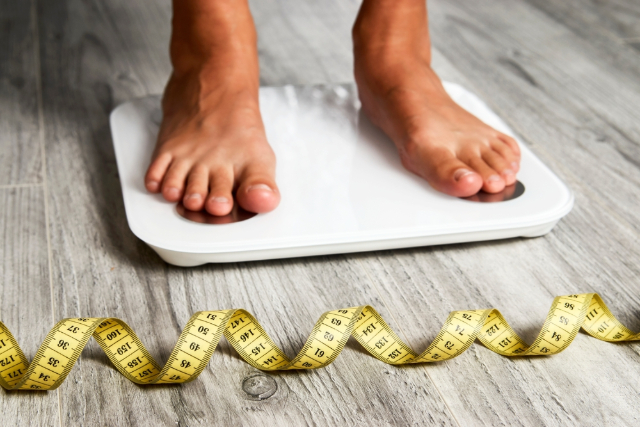
A healthy weight helps insulin work well in your body to manage your blood sugar levels whether you have type 1 diabetes, type 2 diabetes or another type of diabetes. This helps lower your risk of serious problems with your eyes, feet and heart.
There isn't one specific healthy weight for diabetes. The weight that is healthy for you will depend on your height and ethnicity, known as your body mass index (BMI).
A heathy weight BMI for diabetes for adults (18 and over) is between 18.5 and 24.9 (White European). Or 18.5 to 22.9 depending on your ethnic background. We have more information on understanding your BMI below.
Your healthcare professional will work out your BMI at your annual review. It's one of your diabetes health checks. You can also work out your BMI yourself using the online NHS BMI tool if you know your height and weight.
On this page:
- Understanding your BMI
- BMI and ethnicity
- What is a realistic healthy weight for you personally?
- Healthy waist size
- Why waist size matters?
- Making changes to your weight
- How to maintain a healthy weight
Understanding your BMI
Your BMI number falls into one of four categories: underweight, overweight, obese or underweight. See the table below.
If you’d like to get to a healthy weight BMI, your healthcare professional should support you. They can also let you know what other NHS support is available. This could include referral to a dietitian or signposting to weight management services. They can also answer any questions you have about weight loss medication. You may be eligible for weight loss medication on the NHS depending on your BMI.
| White European background | South Asian, Chinese, other Asian, Middle Eastern and Black African or Caribbean backgrounds | |
| Underweight | Below 18.5 | Below 18.5 |
| Healthy weight | 18.5 to 24.9 | 18.5 to 22.9 |
| Overweight | 25 to 29.9 | 23 to 27.4 |
| Obese | 30 or higher | 27.5 or higher |
BMI and ethnicity
The BMI ranges are not the same for all ethnic groups.
In the table, you can see a healthy weight BMI for a White European can be an overweight BMI for some ethnic groups. This includes South Asian, Chinese, Middle Eastern, Black African or Black Caribbean. And an overweight BMI in one ethnic group may be classified as obese in another ethnic group
This is because your body is more likely to develop health problems at lower weights. This could be due to the body being more likely to store fat in and around the organs. This is known as visceral fat (hidden fat).
What is a realistic healthy weight for you personally?
There may be a difference between what is a healthy weight BMI and what is an ideal healthy weight or reasonable target for you. This depends on your relationship with your weight over the years. It’s something you can chat to your healthcare professional about.
Obesity and weight
If you're living with obesity, for example, we know that it may not be possible or easy to reach a healthy weight BMI. Obesity is a complex condition. And there are some factors such as family history, social and environmental (living situation) that can contribute to obesity that are not always within your control.
You can have any type of diabetes and live with obesity. If you're living with diabetes and obesity, it's important to get support from a healthcare professional to help you manage your weight. They should offer advice and discuss the possibility of referral to a weight management service with you, taking into account your individual needs and preferences.
Remember that even small amounts of weight loss can be beneficial to your health and managing your diabetes.
Healthy waist size
Alongside BMI, your waist measurement can be used as a measure of health if you have diabetes.
A healthy waist measurement is one where your waist size is no more than half your height.
To find out your waist size in relation to your height, use the NHS waist to height ratio tool (you'll need a tape measure). Or use our quick, general guide below:
Healthy waist size for women
A waist size under 80cm (31.5in) is generally healthy for women.
Healthy waist size for men
A waist size under 94cm (37in) is generally healthy for men — or for South Asian men under 90cm (35in).
Why waist size matters?
If your waist measurement is high, this may mean you have a type of fat called visceral fat. This is fat you can’t see which in and around the organs like the liver and pancreas.
You can be thin on the outside (with a healthy BMI) and have this type of fat.
Visceral fat makes it hard for your body to respond well to insulin, known as insulin resistance. And it increases your risk of high blood pressure and cardiovascular disease.
Losing any extra weight will help reduce your waist size and reduce visceral fat.
You can have a high (unhealthy) waist size even if your BMI is in the healthy weight category. If this is the case for you, ask your healthcare professional for individual advice.
Making changes to your weight
If you need to lose weight and are thinking about making changes, we’ve developed a weight loss guide to help you.
If your BMI is the underweight category, see our tips on how to put on weight.
How to maintain a healthy weight
Keeping to a healthy weight and avoiding weight gain after losing weight can be difficult. But your healthcare professional can help support you. Use our pointers below.
1. Eat well
To keep you on your healthy weight journey, see our 10 tips for eating well when you have diabetes.
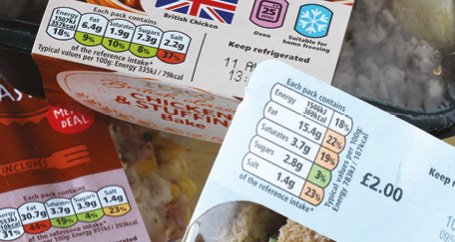
Make healthier choices. Try to choose food items with more greens and ambers and fewer reds on the nutritional label. And, if the traffic lights aren’t available, check the ‘per 100g’ column on the ‘back of pack’ nutritional label.
Use our guide on portion sizes for different types of food.
Experiment and find healthy food you enjoy. You can always try shaking things up a bit with some new recipes. This could help you stay motivated. Try one of our recipes and share it with friends.
2. Plan for days when your routine will be different
For celebrations, holidays and times when you know you may be eating differently, have a plan and write it down, for example:
“If I know I've got a busy day in the office or a busy day on grandparent duty, I’ll make sure I've got frozen vegetables and a jacket potato I can cook in the microwave and a healthy grill such as a chicken breast or fish that I can cook in the air fryer."
3. Keep active
Avoid sitting down for long periods and if you've lost weight aim for 60-90 minutes of activity a day as research shows this can help maintain your new weight.
4. Weigh yourself and measure your waist regularly
Get into the habit of measuring your waist and weighing yourself regularly. This will help you keep a close eye on changes and get back on track if you’ve recently put weight on.
5. Don’t panic if you put on a few pounds
If you do put on a few pounds don’t panic or give yourself a hard time. Look at what has maybe caused this and ask your healthcare professional for support to get back on track. You can also chat things through with one of the trained advisors on our helpline on 0345 123 2399.
Here's how we ensure our content is accurate and reliable by PIF standards