Page saved! You can go back to this later in your Diabetes and MeClose
Exercise for diabetes
Being physically active is good for people with diabetes — whatever type you have — and for people with prediabetes and others at risk of type 2 diabetes, like women who have or have had gestational diabetes.
Regularly taking time to move more can benefit both your physical and mental health. Whether you feel able to go for a run or a swim or can manage some arm stretches or on-the-spot walking while the kettle boils, it all makes a difference.
That’s because being physically active helps insulin work better in your body – either the insulin you take or the insulin your body makes. This helps keep your blood sugar levels within target and helps prevent other health problems linked to diabetes, known as complications.
Find out the other benefits of being more physically active and our advice on where to start. Think of it simply as ‘activity’.
{"preview_thumbnail":"/resources-s3/public/styles/video_embed_wysiwyg_preview/public/video_thumbnails/LZlVVicC8DM.jpg?itok=I-sO6_Ms","video_url":"https://www.youtube.com/watch?v=LZlVVicC8DM","settings":{"responsive":1,"width":"854","height":"480","autoplay":0},"settings_summary":["Embedded Video (Responsive)."]}
There are many benefits of being active if you live with type 1 diabetes, type 2 diabetes, or have gestational diabetes (high blood sugar levels in pregnancy) or other types of diabetes or are at risk of type 2 diabetes. Moving more can:
Help your body use insulin better. If you take insulin, regular activity may reduce how much you need to take by reducing insulin resistance
Help you keep your blood sugar levels within target range and improve your HbA1c
Help some people with type 2 diabetes put it into remission
Help reduce blood pressure and improve cholesterol which helps protect against other health problems caused by diabetes like heart disease
Help you lose weight if you need to and keep the weight off after you’ve lost it
Give you energy and help you sleep
Help your joints and flexibility
Help your mind as well as your body - exercise releases endorphins, which you could think of as happy hormones. Being active is shown to reduce stress levels and improve low mood.
There isn’t one type of physical activity that’s best for everyone with diabetes or people at risk of type 2 diabetes.
What’s important is that it gets your body moving more, that you enjoy it and that it fits into your life at a time that works for you. And that it’s appropriate for any pain or other health problems you have, including diabetes complications.
Starting small is sensible if you are new to exercise, have pain, or haven’t been active for a while. It means you won’t overdo it and can stop if something hurts.
If you use insulin or other medication that lowers your blood sugar levels, it’s important to check them before and after exercise. See our page on exercise and blood sugar levels.
Walking, if you can, is often a good place to start. You don’t need to join a fitness class or a gym, unless that’s something you’d enjoy.
Exercise can be as simple as kicking a ball around the park with your child or grandchild or going for a paddle if you’re on holiday.
Sports popular with people becoming more active include bowls, dancing, walking football and walking netball.
Nearly any activity can be adapted to suit your own needs. For example, you might want to try seated stretches instead of standing ones or try walking in a swimming pool rather than on land to avoid putting weight on your joints.
If you haven’t been active for a while, setting yourself realistic targets can help, such as a 10-minute walk after a meal, rather than expecting yourself to meet NHS physical activity targets overnight. Each step you take to move more can help with managing your diabetes or help prevent type 2 diabetes. The small victories count.
Remember also that feeling your fitness building is a great motivator to keep going. Tracking your progress is also an effective way to spur you on and show how far you’ve come.
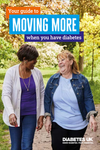
To help you get started we've created Your guide to Moving More (PDF, 2.9MB). There's space for you to plan your activity and track your progress, as well as lots of information to support you along the way.
Don’t be hard on yourself if there are days you feel tired and unmotivated. You could try resting in the morning and then introducing some movement into your afternoon. However, sometimes you need a break or time to relax, and it’s okay to do that.
And remember to celebrate your milestones with treats that mean something to you – this could be a day out somewhere with family or friends.
Breaking up periods of inactivity
Breaking up long periods of sitting or lying down regularly can help lower your blood sugar levels. So, for example, you might stand up for a while every 30 to 45 minutes or make phone calls standing up.
Standing uses up more than twice as much energy (calories) as sitting, as well as being better for your body.
You can also reap the benefits of being active without having to brave the outside. “We know that home can be a great place for people to start moving more, without the need for expensive gym memberships or sports equipment,” says Diabetes UK’s Senior Physical Activity Advisor Neil Gibson.
This is particularly beneficial during the winter months when it's cold outside and it gets dark earlier.
On-the-spot walking during TV ad breaks or when you’re waiting for the kettle to boil.
Stretches for your arms and legs whilst sitting in a chair.
Vacuuming your home or washing your car.
Gardening - if you have a garden. If you don’t, do you have any house plants you can water, prune and re-pot while standing up.
Put some music on and have a dance.
Stand up for work meetings or phone calls and consider a standing desk.
Housework can be a great way to let off steam, raise the pulse and work a range of muscle groups.
Strength training can be done while standing, sitting or lying down. Use tins, bottles or water jugs for strength moves like bicep curls or shoulder raises.
Try short yoga exercises to build strength, flexibility, balance and coordination, and to help ease pain and anxiety, as well as improve posture.
If you have stairs, do one ascent and descent and build up gradually to improve stamina.
It’s surprising how a slight change of routine can increase your physical activity levels and help you feel better when you’re living with diabetes. This could include:
getting off the bus or tube one stop earlier, or parking further away from your destination
taking the stairs instead of the lift or escalator
carrying your shopping home. The bags will act as weights.
walking or cycling for small journeys, rather than using a car or public transport.
When you have diabetes, or are at risk of type 2 diabetes, it's important to keep active at work, particularly if you’re sitting in front of a computer for a long time. You could try:
walking meetings, using hands-free equipment to chat whilst moving around in a safe environment
standing when you’re on the phone or trying to use a standing desk
chair-exercises, like sitting and lifting your arms up
putting set break times in your work diary every day and using the time to be more active - eg going for a walk and getting some fresh air
stretching for 5 minutes after every meeting; this can also be a great way to relieve stress.
If you’re more motivated by following a routine, you may find video workouts helpful. There are lots to choose from.
Try one of our free video workouts with Celene and other fitness instructors suitable for people with diabetes — from 4 minutes to 30 minutes, on our YouTube channel.
Staying connected with others can also help with both your physical and mental health. So, think about getting moving with family, friends or neighbours. Or even doing one of our fundraising events that helps you get active and raise money, so we can keep working towards a world where diabetes can do no harm.
Are there any unsuitable exercises for diabetes?
If you have prediabetes, type 1 diabetes, type 2 diabetes or other types of diabetes, you’re able to take part in almost every type of physical activity.
You may need to meet certain criteria and have a medical assessment for extreme activities such as scuba diving, skydiving and mountaineering. For diving guidance, see more information on the diabetes page of the UK Diving Medical Committee website.
Speak to your healthcare team
It’s good to be active, but you also need to take care of your body. Before trying any new exercises, it’s important you check with your GP first. They can help you decide what’s safe and consider any complications you have.
You can still exercise if you have diabetes complications such as problems with your eyes or heart, but you’ll need to think a bit more about the activity you choose. And talk it through with your healthcare team.
For example, you should avoid high-intensity activity such as high-intensity interval training (HIIT) and heavy lifting. But there are other gentler, low impact exercises you can try, such as swimming, cycling or walking.
Nerve disease
Do mostly activities where you aren’t putting weight on your feet, for example, swimming or chair-based exercises, especially if your gait – the way that you walk – has changed or if you have a foot deformity. If you have regular appointments with a foot care specialist or team, always talk to them about whether an activity is suitable for you before starting something new.
If you have foot ulcers, avoid weight-bearing activity, including jogging.
If you have postural hypotension, avoid activities with rapid changes in direction, such as squash and tennis, to avoid falling or fainting.
Eye disease
If you have moderate or severe non-proliferative retinopathy, avoid activities that dramatically raise your blood pressure, such as sprinting and lifting weights.
Kidney disease
If microalbuminuria is present, most activities are safe, but avoid vigorous exercise the day before urine protein tests
With overt nephropathy, also called macroalbuminuria, (and if on dialysis), it's best to avoid high-intensity and strenuous exercise.
Foot problems
If you have problems with your feet, such as neuropathy or foot ulcers, you might need to avoid certain types of weight-bearing activity, like jogging. Chair-based exercises might be better for you, like raising your legs one after the other or lifting cans of food while you’re sitting down.
It's also important to wear suitable footwear when exercising and make sure to regularly check your feet for any changes in the way they look or feel.
People who use insulin or medications that can lower blood sugar levels often say that the biggest barrier to being more physically active is a fear of how blood sugar, known as hypoglycaemia or hypos. But the benefits of physical activity on your diabetes and overall health far outweigh the risks. So we've put together some tips to help you:
Keep plenty of fast-acting hypo-friendly carbohydrates, like sugary drinks and glucose tablets, to hand, just in case you need them, which can help build your confidence. And reassure you that you will be safe while being more active.
Reduce hypo anxiety by making sure you check your blood sugar levels regularly, so you can learn how your body reacts to certain movements. And starting with just a few minutes of activity and building up gradually over days and weeks.
Some people also find using a continuous glucose monitor (CGM) a quick and reassuring way to keep an eye on how activity is affecting their blood sugar levels. You can also review the effect of activity on your blood sugar levels afterwards. But tech isn’t suitable for everyone and not everyone is eligible. Everyone with type 1 diabetes, some people with type 2 diabetes and gestational diabetes should be considered for one of these devices. For more information, see the who qualifies for a CGM page.
Everyone is different, but in general, gentle activity where you don't get out of breath quickly, such as walking, swimming, and cycling, tends to lower blood sugar levels.
However, activities that have short, fast, powerful movements where you get out of breath quickly, such as sprinting, punching and weightlifting, tend to make your blood sugar levels go up. Other factors, such as stress and the weather, may also have an impact.
“Being able to see my blood glucose readings with my Freestyle Libre2 gave me the confidence to become more active again which helped lower my HbA1c.” Read Holly's experience.
Try the Undefeatable physical activity app
To help encourage people to move more across the UK, we've teamed up with Sport England and other charity partners in the We Are Undefeatable campaign.
Find out about the new We Are Undefeatable physical activity app which is safe for people with diabetes and other long-term health conditions and ideal for people new to exercise. Includes chair-based workouts.
"It's never too late. There are so many different activity groups you can go to now," Simon, who has type 1 diabetes and has had both lower legs amputated. Hear his experience in the video.
{"preview_thumbnail":"/resources-s3/public/styles/video_embed_wysiwyg_preview/public/video_thumbnails/8GhgnRZj7X0.jpg?VersionId=zv7tKCPUUXUpmPUXtwGJlxizKvuLaAe6&itok=FdD1qpue","video_url":"https://youtu.be/8GhgnRZj7X0","settings":{"responsive":1,"width":"854","height":"480","autoplay":0},"settings_summary":["Embedded Video (Responsive)."]}