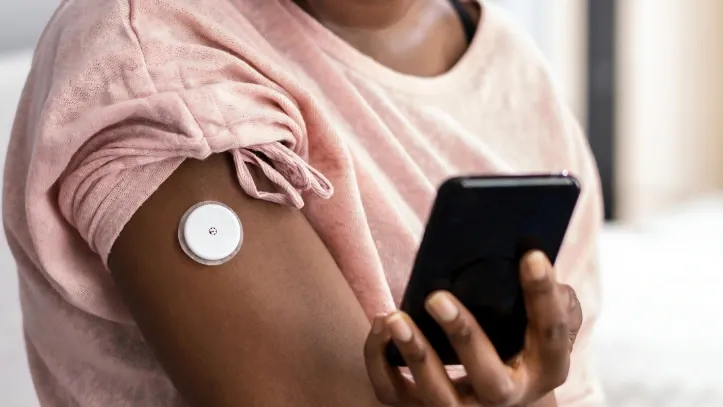
Science and medical writer, Susan Aldridge PhD, reviews a study on equitable access to continuous glucose monitoring (CGM) in England, which highlights significant inequalities, particularly affecting people from South Asian, Black African, and Black Caribbean communities.
CGM tech can transform how people with diabetes manage their condition – making living with it safer and easier. But research led by Professor Samuel Seidu at Leicester Diabetes Centre shows that who gets access to CGM can still depend on where you live, your ethnicity, and levels of deprivation.
The study analysed NHS data on CGM prescriptions across England. The findings revealed that people with diabetes from Black and South Asian backgrounds, and those living in socioeconomically deprived areas, are less likely to access the tech. This is despite the fact that these groups have higher rates of type 2 diabetes and its harmful complications.
Guidelines by NICE now recommends CGM for all adults and children with type 1 diabetes – and some people with type 2 diabetes. But this study suggests these guidelines are not being applied consistently. Not all Integrated Care Boards (ICBs) have adopted local policies that reflect NICE guidance, which may contribute to differences in access.
Overall, results showed large differences in how often CGM tech is prescribed across England:
- CGM prescribing was higher in areas with larger White populations. While areas with higher proportions of Black African, Black Caribbean, and South Asian people were prescribed less. This was the case for both type 1 and type 2 diabetes.
- Even in areas with similar levels of deprivation, Black African, Black Caribbean, and South Asian people remained less likely than White people to receive CGM.
- Ethnicity and deprivation together explained much of the difference in who gets prescribed CGM, particularly for people with type 2 diabetes.
- Local health systems that put NICE guidelines into practice were more likely to prescribe CGM.
The study highlights the need for fairer access to diabetes technology. The researchers call for NICE guidance to be uniformly applied across England. And for culturally tailored outreach and action on socio-economic inequities, so that no one is left behind.
Equitable access to CGM means the communities most impacted by diabetes can benefit from the tools that help keep blood sugars in target and protect against devastating diabetes complications.
Anthony Walker, Senior Policy Officer at Diabetes UK, said:
“Everyone deserves to know what diabetes technology is available to them, and how to access it. Yet this isn’t the reality for many people with diabetes, and this research highlights the very real inequities that exist when it comes to gaining access to this life-changing tech.
“Actively raising awareness among underserved communities is crucial. Healthcare professionals must also be supported to identify where the gaps in access are and have the tools to develop targeted interventions to address them.
“It is vital that NICE’s guidelines are adopted consistently, so that everyone who could stand to benefit from this transformative technology can access it.”
Our Tackling Inequity Strategy 'No One Left Behind' sets out our vision and plans to tackle unfairness in diabetes care, and to ensure everyone — no matter their background, identity or circumstances — can access the treatment, support and opportunities they need to live well.
This article appeared in full in our Spring 2026 Update magazine.
For more information, you can read the full study on inequities in diabetes care, published in Diabetic Medicine.
We will soon be publishing information on an upcoming data dashboard that will provide more detail on any inequities.