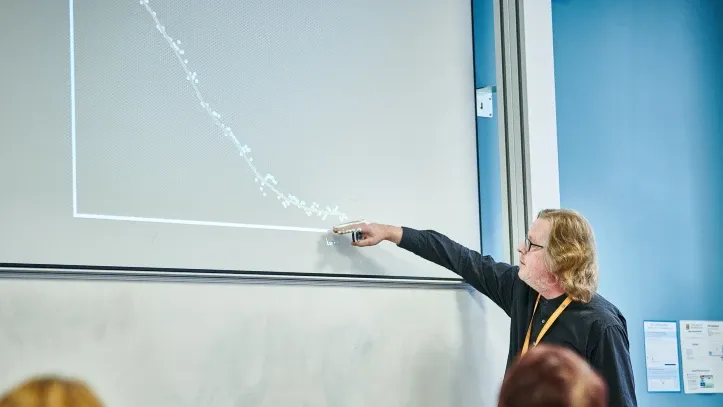
So much of what we know about diabetes – from who is most at risk to which treatments work best – starts with data.
Every day, millions of data points are recorded through health records, research studies and everyday care. On their own, they might not seem like much. But when they’re brought together, they start to tell a story, revealing patterns, predicting risk and uncovering insights that can shape better care. Behind it all are health data scientists, turning information into real understanding.
It’s an exciting and fast-growing field, with increasing opportunities for new talent to get involved. Through our partnership with Health Data Research UK (HDR UK), we’re supporting students at the very start of their research careers to complete a Master’s programme and build the skills and confidence needed to tackle some of the biggest questions in diabetes research using health data. There’s still time to apply for this year’s programme if you’re interested in getting involved.
But what difference can programmes like this make, and what draws people into this work? We spoke to three students to hear about their experiences of the scheme, and how it’s shaping their journeys into diabetes data science.
Why data - and why diabetes?
For current student Alex Puricelli, the motivation came from seeing inequality up close. Before starting his Master’s at the University of Cambridge, Alex worked with families in deprived communities, where access to diabetes information and support was often limited:
“Parents I’d seen hadn’t been provided with the right diabetes information and support...I applied to the master's degree scholarship so I could contribute to public health research focused on reaching and providing resources to communities that have been historically marginalised.”
While Alex was motivated by tackling inequity, others came to the programme through long-standing interests in how data can transform care.
For former student Samana, that interest had been there for a long time. With a background in medical genetics, she was fascinated by how data could be used to predict risk earlier and tailor treatments to each individual, an approach known as precision medicine:
“I realised type 2 diabetes was one of the most common conditions, with so many key drivers. But I also realised I needed strong health data and statistical skills if I really wanted to help close the gap between the theory of precision medicine and current clinical reality.”
For former student Matthew, it was the opportunity to use those skills at scale in real-world health systems that really appealed.
Matthew brought experience from previous work on large-scale health technology projects and saw the scholarship as a way to deepen his research skills and apply them to questions with immediate relevance for people living with diabetes:
“It felt like an opportunity to build the knowledge needed to contribute more meaningfully in a field that’s evolving quickly and can make a real difference to people’s lives."
What they studied - and why it matters
Despite their different starting points, all three students used data to tackle questions with real-world implications.
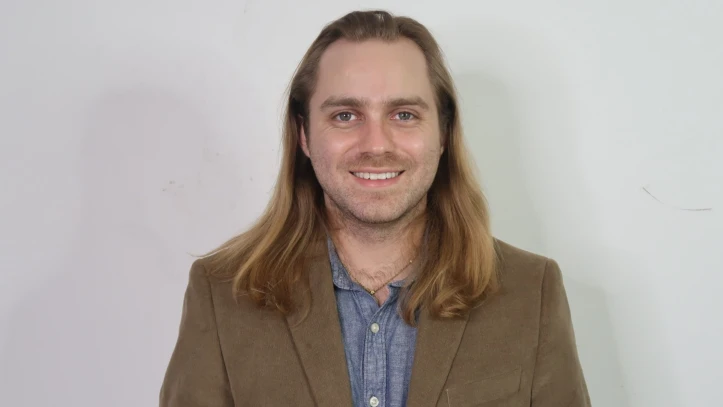
Alex’s research explores how UK media coverage frames new incretin drugs, and how the same drugs are discussed differently when used to treat type 2 diabetes compared with weight management. Incretins are a group of medicines that mimic hormones the body releases after eating. Some, like Ozempic or Mounjaro, help manage type 2 diabetes, while others are used to support weight loss:
“These medicines appear in headlines almost daily...Media narratives drive stigma and influence health policy. Understanding the messaging that patients, the public and politicians are exposed to is a crucial step in building support for more equitable policies and better access to care.”
While Alex’s work focuses on how diabetes is understood and discussed, others are tackling how data is used directly in clinical research and decision-making.
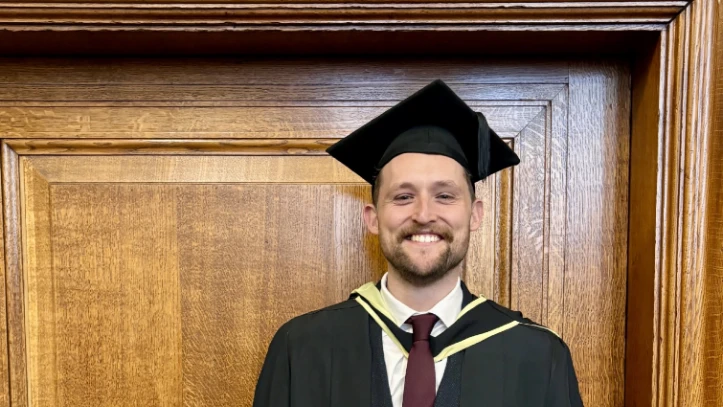
Matthew’s project looked at another side of diabetes care – medication safety. He investigated whether SGLT2 inhibitors are associated with an increased risk of hospitalisation due to diabetic ketoacidosis, a rare but serious complication.
SGLT2 inhibitors are medicines that lower blood sugar by helping the kidneys remove excess sugar from the body.
Using health data covering around 96% of the population in England, Matthew was able to study a rare outcome at a scale, not otherwise possible:
“That access to national data really showed me what’s possible when research, governance and data infrastructure come together."
He has since submitted this work for publication, with the aim of helping support safer prescribing and use in clinical practice.
Alongside these large-scale analyses, Samana focused on strengthening the methods that underpin clinical tools.
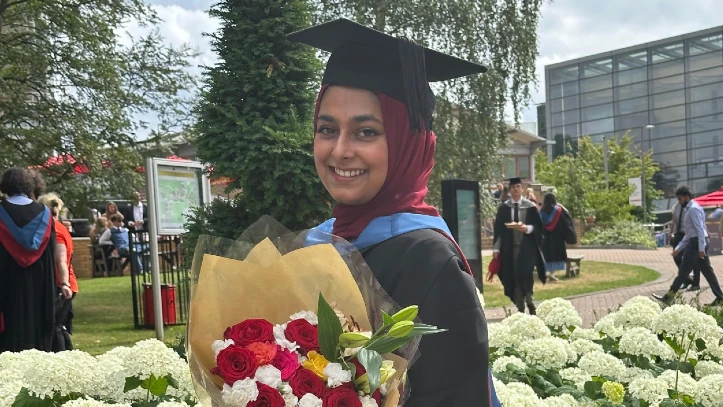
As part of her Master’s, Samana chose to study medical statistics. Her research involved updating the Leicester Diabetes Risk Score, used in the NHS Health Check programme to help identify people at higher risk of developing type 2 diabetes. This is the same score that underpins our Know Your Risk tool, helping people understand their risk and take action.
By improving how risk is measured and making better use of data on ethnicity and deprivation, her work showed how these tools can be designed to work more fairly for everyone. If you’d like to understand your own risk of type 2 diabetes, you can use our Know Your Risk tool.
“One of the biggest lessons for me is that fairness doesn’t happen by accident ...If you want models to work for everyone, you have to design them that way from the start.”
The experience also shaped her confidence and sense of belonging in the field:
“It pushed me to do things I’d previously thought weren’t for people like me. That mindset shift is now shaping my next steps towards a career in health data research.”
Turning data into impact
Together, Alex, Samana and Matthew show the many ways data can be used to improve diabetes care – from challenging stigma and informing policy, to strengthening risk prediction and supporting safer use of medicines.
While their projects differ, they share a common thread – a commitment to using data responsibly, thoughtfully and with people’s lived experiences in mind.
By investing in early-career researchers through our partnership with HDR UK, we’re helping to build a diverse, skilled and values-driven health data community, one equipped to turn complex data into discoveries that can make a real difference for people living with diabetes.
Programmes like this also help bring together different skills and perspectives. As Matthew puts it:
"They create opportunities to build the knowledge needed to contribute more meaningfully in a field that’s evolving quickly and can make a real difference to people’s lives.”
For Samana, that collaborative approach is key:
“Programmes like this help build a community of early-career researchers who are technically skilled, equity-focused and connected across disciplines.”
Together, Diabetes UK and HDR UK are helping to build the next generation of researchers who will shape the future of diabetes care through data. And as health data continues to play a bigger role, programmes like this are helping ensure that the people shaping its future are not only technically skilled but driven to make a difference.
Applications for this year's scholarship round are now open. If you're interested in using data to make a difference in diabetes care, you can find out more and apply.