Page saved! You can go back to this later in your Diabetes and MeClose
Ten years of discoveries shaped by British Bangladeshi and British Pakistani communities
2026-03-23
Genes & Health is one of the world’s largest studies focused on the health and genetics of British South Asian communities. It’s based at Queen Mary University of London and co-led by Professors Sarah Finer and David van Heel. The study has recruited more than 75,000 British Bangladeshi and British Pakistani volunteers across east London, Bradford, Manchester and the West Midlands.
This article, written by the Genes & Health team, explores how the study's research impact could transform the lives of South Asian people living with diabetes.
South Asians make up just a quarter of the world’s population yet carry over a third of the global burden of type 2 diabetes. In the UK, British South Asians are up to six times more likely to develop the condition and often do so at younger ages, at lower body weights, and with more severe complications than white people.
For the past decade, the Genes & Health study has been working to change that story.
It's been built side‑by‑side with local communities, working with grassroots organisations, the NHS and research networks. These long-standing relationships have helped the programme earn trust and shape research that reflects what matters most to South Asian communities.
While the programme covers a wide range of health issues, diabetes has become a central focus.
The Genes & Health study has built one of the richest and most secure databases of its kind, bringing together volunteers’ saliva samples (for genetic information) and anonymised NHS health records.
This covers an extraordinary three million years’ worth of NHS health records from its volunteers, allowing researchers to build detailed pictures of their health throughout their lives. More than 250 researchers around the world now use this secure data to generate discoveries that aim to improve the health of current and future generations of British Bangladeshi and Pakistani people.
Uncovering why type 2 diabetes is so common in South Asian communities
By analysing genetic and health information from tens of thousands of volunteers, Genes & Health has uncovered some of the specific biological reasons that can – in part – explain the higher risk of type 2 diabetes in British Bangladeshi and Pakistani people.
A key tool in this work is something called a polygenic risk score, which combines thousands of tiny genetic signals to estimate someone’s inherited risk of developing a condition.
First, we needed to create versions of these scores designed specifically for people of South Asian ancestry as most of these tools were built and tested only in white European people, meaning they would not work as well for South Asian communities.
The findings show that polygenic risk scores could help identify young Bangladeshi and Pakistani people at high risk of type 2 diabetes, before the onset of risk factors that the NHS usually looks for. This could open the door to much earlier prevention, including support through the NHS Diabetes Prevention Programme.
We have shown that in Bangladeshi and Pakistani women, those with a high polygenic risk score are five times more likely to develop gestational diabetes, and nearly twice as likely to go on to develop type 2 diabetes, compared to those at lower genetic risk.
We used these scores to understand the biological processes that are involved in the development of type 2 diabetes in South Asians. We found that two factors played a particularly strong role: lower insulin production – meaning the body struggles to make enough insulin – and having fat stored in more harmful places in the body, like in and around organs.
Volunteers with the highest genetic risk for lower insulin production and harmful fat storage tended to develop type 2 diabetes nearly ten years earlier, and at a lower body weight, compared to people with low genetic risk.
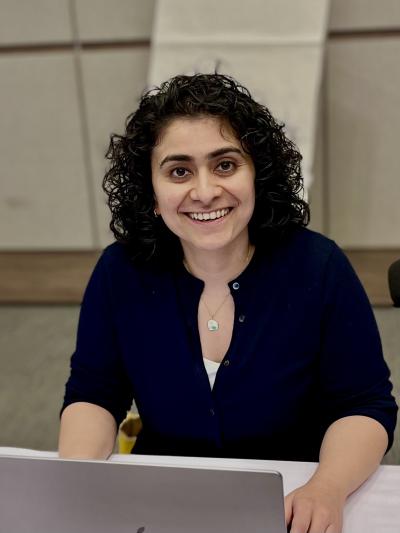
Dr Moneeza Siddiqui, Senior Lecturer in Genetic Epidemiology and member of the Genes & Health Executive, pictured below, explained:
“South Asians often develop type 2 diabetes at younger ages and for different biological reasons. This can include having a lower body mass index (BMI), the body making less insulin, and particular genetic patterns. By studying these pathways in our communities, we can move towards earlier diagnosis and more tailored, effective diabetes care.”
Getting the diagnosis of diabetes right
When someone is first diagnosed with diabetes, it can sometimes be difficult for healthcare professionals to be completely sure whether they have type 1 or type 2 diabetes. This misdiagnosis can be a particular concern for South Asian people, who can develop type 2 diabetes at younger ages and lower BMI, making it easy to confuse with type 1.
Healthcare professionals working with us raised this concern and designed a study to uncover how often this happens. By applying polygenic risk scores, they were able to estimate how often the wrong diagnosis might be given. They found that around 1 in 20 British Bangladeshi and British Pakistani people with insulin-treated diabetes were likely to have type 1 diabetes, despite being diagnosed with type 2.
This highlights the value of using tests that help to confirm type 1 diabetes. These tests can help avoid delays in appropriate care and reduce the risk of dangerous diabetic ketoacidosis.
Recently, we helped uncover another important issue affecting type 2 diabetes diagnosis. Researchers identified a genetic condition called G6PD deficiency, which is relatively common in men of South Asian or Black heritage. This condition can make HbA1c test results look lower than they really are, potentially masking high blood sugar levels. This can delay a diagnosis of type 2 diabetes for several years, increasing the risk of complications because treatment starts later.
The power of community in research
Research like this is only possible because tens of thousands of people chose to take part. Genes & Health co-lead, Professor Sarah Finer, pictured below, explained:
“For too long, South Asian communities have been left out of genetic research and we are proud to be changing that through trusted, community engaged and high-quality research. We encourage more people to join the study and help us continue this long-term journey to improve prevention, diagnosis and treatment for people living with or at risk of type 2 diabetes.”
Genes & Health has become a leading example of how to build trust and overcome the past under representation of people from diverse backgrounds in health research. From the outset, the programme invested in genuine, long-term partnerships with British Bangladeshi and British Pakistani communities. This included working with grassroots organisations, faith leaders and local groups, and forming a Community Advisory Board, a group of local volunteers who meet four times a year to help guide priorities and raise concerns.
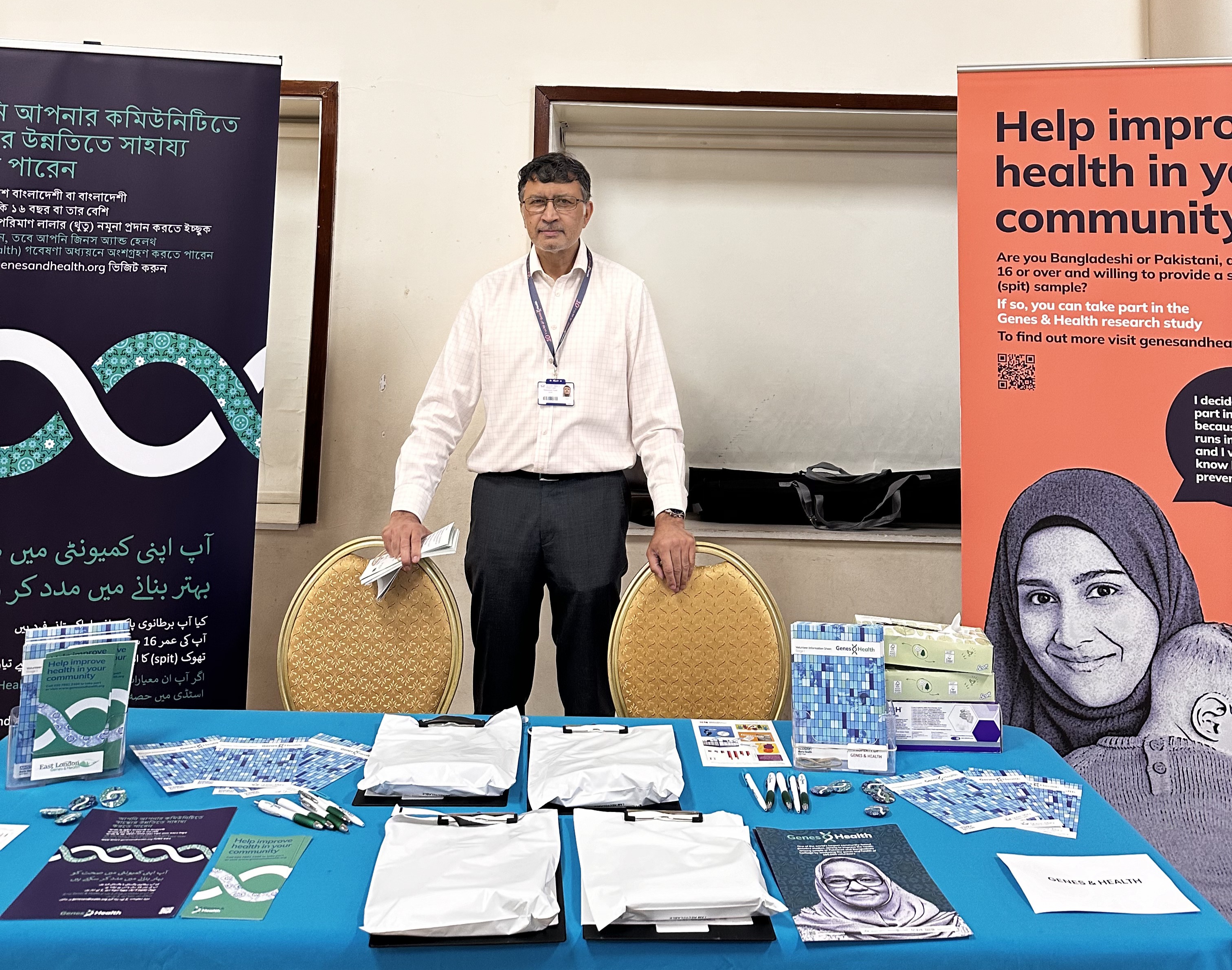
Bodrul Mazid from the Genes & Health recruitment team, pictured below, adds:
“When we are out in the community, people tell us they are grateful that someone is finally focusing on the health of British Pakistani and British Bangladeshi families. They feel seen. Many say they take part because they want future generations to have better facilities and medications than they did.”
The next 10 years
As the NHS looks to use more genetic testing and personalised care approaches, our findings will help make sure this progress benefits everyone, not just a few. This is especially important for communities at highest risk and those who have historically been underrepresented in research.
Most importantly, this progress belongs to the tens of thousands of volunteers and the community, NHS and research partners who have supported the programme. Their commitment is helping create a future where diabetes care is more accurate, more inclusive and fairer for generations to come.
For more information, or to join the study, visit the Genes & Health website.