Diabetes Week 2026
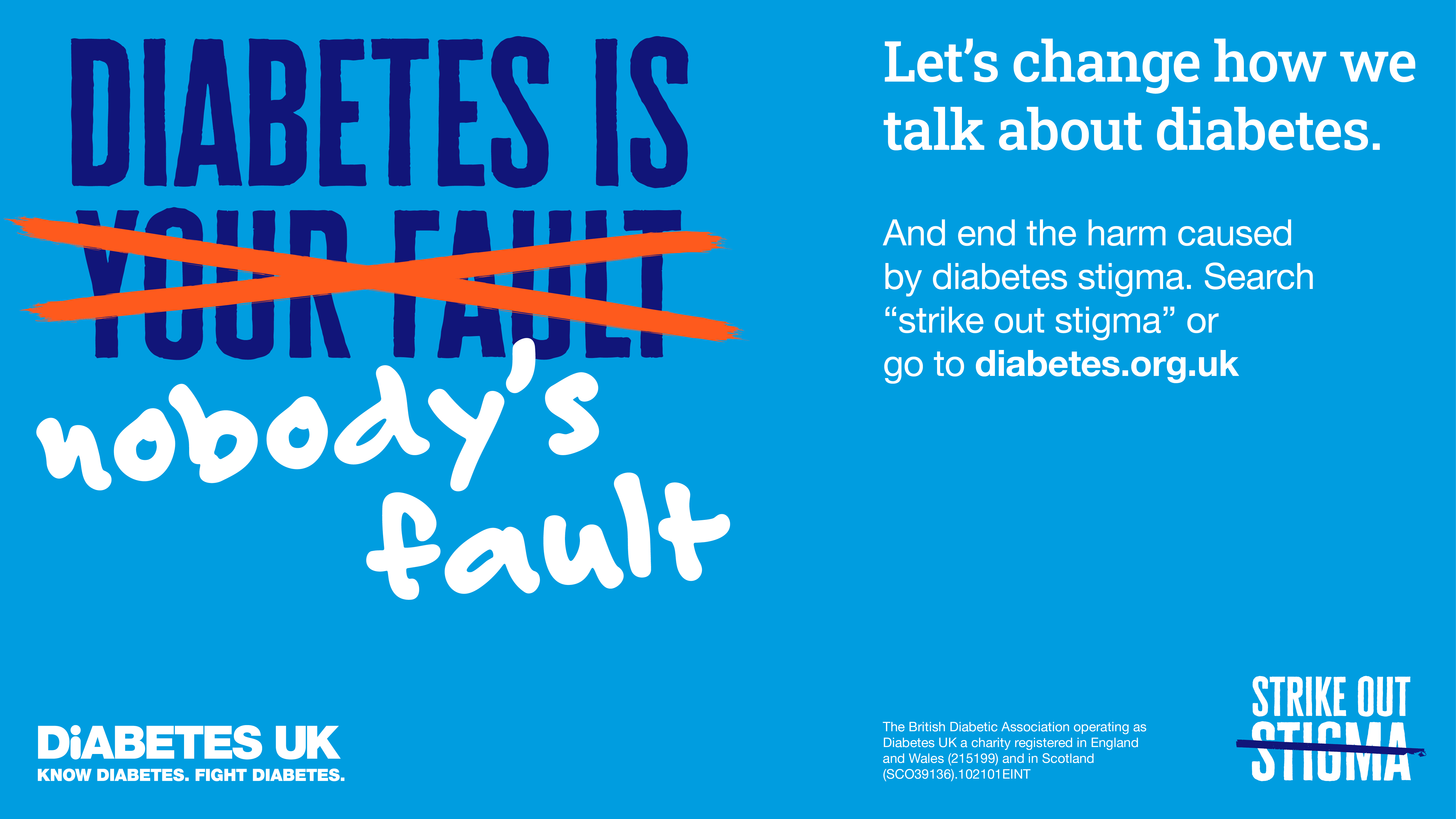
This Diabetes Week, let's change how we talk about diabetes.
8 out of 10 people living with diabetes say they’ve faced negative attitudes because of their diabetes - people passing judgement, making sweeping statements, or blaming and shaming people living with diabetes.
This is diabetes stigma. And it causes real harm to millions.
That’s why we’re on a mission to ‘Strike Out Stigma’.
To show people that nobody chooses diabetes. That it isn’t anyone’s fault. And that by changing the way we talk about diabetes, together we can create a world where diabetes does no harm.
Diabetes Week takes place from 8 to 14 June 2026. Below you’ll find resources, information, stories and more.
Download or print off our Diabetes Week posters and resources to share with your friends or family:
Diabetes is nobody's fault: blue background (PDF, 143KB), white background (PDF, 87KB)
Should you be eating that? blue background (PDF, 152KB) , white background (PDF, 87KB)
Are you comfortable injecting here? blue background (PDF, 189KB), white background (PDF, 89KB)
How to be a diabetes ally - Advice for loved ones (PDF, 735KB)
If you're a healthcare professional, you can download or print off and share our Are you BLAME aware? (PDF, 125KB) poster.
If you work in a GP surgery, we have a version of the Diabetes is Nobody's Fault poster for digital screens (JPEG, 2.71MB).

Join the campaign

Share your story

We're here for you
Are you BLAME aware?

Your stories of diabetes stigma
You can follow us on Facebook, X or Instagram, or sign up to our free e-newsletter for the latest Diabetes UK updates – including hot-off-the-press research news, delicious recipes, heart-warming stories, exciting events and more.
See below people living with diabetes discussing how they have experienced diabetes stigma:
'Can you eat that?'
Diabetes is often misunderstood. And those misunderstandings show up in everyday moments.
From hearing “Can you eat that?” to reactions when injecting in public, we spoke to Sasha (living with type 1) and Jade (living with type 2) to hear more about their experiences.
'Is this my fault?'
Nobody chooses diabetes. And nobody is to blame for it either.
But that doesn’t stop people like Mark and Jo from wondering: Is this my fault?
Misunderstandings between different types of diabetes
Diabetes stigma doesn’t only come from outside the community - it can exist within it too.
In this conversation, Ken (living with type 2) and Niki (living with type 1) open up about the misunderstandings between different types of diabetes.
What is diabetes stigma?
Diabetes stigma is the negative attitudes and false assumptions people make about those of us living with or at risk of diabetes. It impacts people with all types of diabetes, and arises from misconceptions and misunderstandings of the causes, management and realities of diabetes.
Sadly, the stereotypes and misconceptions about diabetes are often internalised by people living with diabetes - with nearly half of those that completed our survey believing that they are true.
This can lead to feelings of shame - people who experience or internalise stigma are more likely to report symptoms of depression, anxiety, diabetes distress and low self-esteem.
Evidence of diabetes stigma
- Over half of people we surveyed said that stigma, judgement or shame means they sometimes avoid medical appointments.
- Across the UK over 8 in 10 people with type 1 and over 7 in 10 people with type 2 say they experience blame and judgement for their condition
- People from Black African, Black Caribbean and South Asian communities are more likely to experience diabetes stigma
- Almost 6 in 10 people we surveyed said stigma impacts on their own self-confidence and over half also internalise that shame and believe they are at fault
- 1 in 5 experience stigma in the workplace every few weeks, according to our survey
- Stigma is most commonly experienced close to home, from friends and family members
What impact will our campaign have
We want fewer people living with diabetes to experience stigma, which will lead to:
- more empowerment
- better health outcomes
- fewer days in hospital
- more research investment
- new treatments
- better care.
This will contribute to a better life where they are happy and well.