Page saved! You can go back to this later in your Diabetes and Me Close

Bonnie's Story: Changes that worked for me after my type 2 diabetes diagnosis

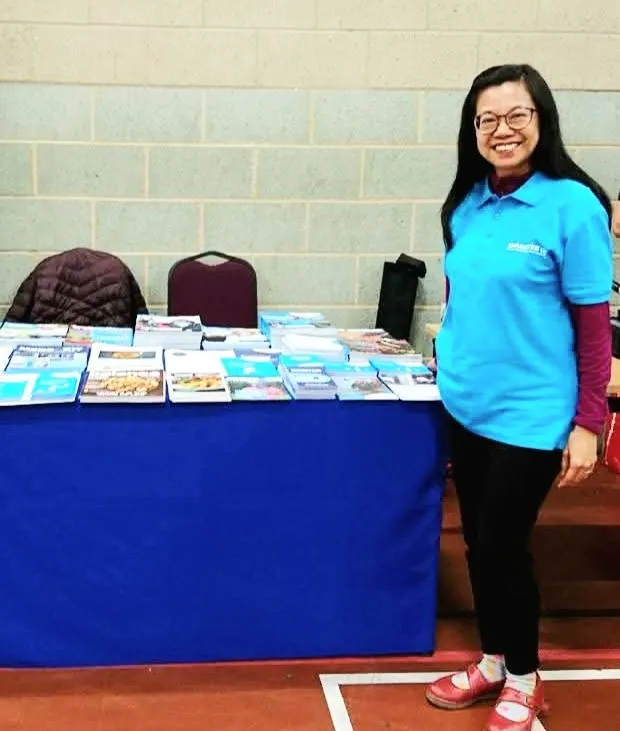
A lady with dark hear and wearing glasses pictured beside a Diabetes UK information table that has several leaflets on it.
"My diagnosis was the start of a new journey – looking at those steps around a balanced diet and reasonable exercise, and how I could make that work for me."

Bonnie, who lives in Manchester with her husband, is a homemaker and freelance Cantonese interpreter who supports patients in the NHS and other organisations. She has volunteered with Diabetes UK for over a decade, supporting our work to help people identify their risk of developing type 2 diabetes.

It was through this very role, that Bonnie discovered she had type 2 diabetes back in 2014. She shares with us her diagnosis experience and the plans and resources she found helpful to support her in looking after her diabetes.

Next Review Date
Content last reviewed
10 September 2026
Next review due
26 August 2031

Diagnosis

Assessing my own risk

I had started volunteering with Diabetes UK in 2013 and I had joined a whole day training session called Risk Assessment where we were trained to help people complete a questionnaire and take some measurements to understand more about their risk of type 2 diabetes. This work has developed into a tool that people can access online called Know Your Risk.

When I completed the questionnaire myself, it suggested I had moderate risk – the trainer filled in a referral form for me to bring to my GP. From there I had a blood test and my HbA1c came back as 61mmol/mol. I had that repeated after two weeks and had a similar result, so I received my diagnosis just before Christmas 2014. 

Food and healthy eating

Changes to our meals

After finding out, I followed advice from my diabetes nurse to make some adjustments to my diet to ensure it was more balanced, and to also look at my exercise routine.  

"I visited the Diabetes UK website and found loads of useful information about healthy eating, recipes, how to read food labels, what a balanced diet is, and the aspects of being more active. I also read research papers and reports about diabetes among people from different cultures."

After my diagnosis, with the support of my diabetes nurse, we identified areas of my diet that would be harmful to my health in the long run. We introduced wholemeal bread, low sugar jams, and the likes of oat porridge, fruit and yoghurt or a boiled egg for breakfast. We tend to avoid foods like sausages, bacon and chips to help reduce both fat and salt in our diets. 

For other meals we’d look at more vegetables, steamed or pan-fried meats in olive oil, rather than deep frying, which we would have done occasionally before my diagnosis. We also try to avoid processed foods as much as possible. For snacks we have home roasted nuts – without salt or sugar – rather than crisps, biscuits or cakes.

Everyone will build out their balanced diet in different ways, but these are the changes that worked well for me.

Activity

Finding exercise you enjoy

I thoroughly enjoy doing yoga and attend Pilates and Tai Chi classes every week to help with my flexibility and balance. I also have built up the habit of walking at least 30 minutes daily in different areas surrounding my home. Unless it’s absolutely pouring, I try to keep going with this daily routine – even in the snow!

Journey with diabetes

Finding that connection

Looking back, finding out about my diagnosis was not the end of the world for me. Really, it was the start of a new journey – looking at those steps around a balanced diet and reasonable exercise, and how I could make that work for me.

I’ve found that all these require determination and self-discipline, and yes, sometimes it can be tiring and frustrating. But it’s so important to look out there to the many people who are looking after their diabetes and leading a fruitful life – we can mutually support and empower one another along the way.

"For others who have type 2 diabetes, I’d encourage getting involved – it was something that really helped me. Look into volunteering, take part in an event, visit the Learning Zone, ask questions and invite feedback and networking opportunities. These moments can offer precious opportunities for insight and meaningful communication."

When I take part in a volunteering activity – like a speaker presentation – I go through the slides and learn all about the latest statistics and technological advancements. When distributing leaflets to the public, I’ve found myself becoming a lot more fluent with the content of the leaflets such as symptoms to look out for or healthcare essentials. Also, if I have a question, the staff at Diabetes UK will always try their best to seek an answer for me. The networking with other volunteers also provides valuable opportunities for that aspect of peer support.

Feeling accepted

I feel it’s very common for people with type 2 diabetes to be blamed for ‘being indulgent’ or ‘becoming a burden to the family’. There are many factors that contribute to its development, not just what people think about our weight and habits, such as family genetics, ethnicity and age.

"Luckily, I have found that my experience at the time of diagnosis and over the last 13 years of volunteering is that Diabetes UK gives us all forms of support, appreciation, respect and acceptance."

We feel so valued as a unique individual, not simply labelled as a ‘type 2 person’. 

___________________________________________________________________________________________________________________________________________________

Reach out for support

If you are affected by the topics highlighted within this story or other stories on our website, you can access support from our helpline team on 0345 122 2399, Mon- Fri, 9am- 6pm, or email helpline@diabetes.org.uk.

You can join our free Support Forum – to connect with others affected by diabetes (minimum age 13). For more information, see Forum FAQs.

For those aged 11-25 living with type 1 diabetes, check out our youth programme Together Type 1 for a supportive community of people who understand what it’s really like juggling the ups and downs of life with diabetes. 

Back to Top
Brand Icons/Telephone check - FontAwesome icons/tick icons/uk