Page saved! You can go back to this later in your Diabetes and Me Close

Caron's story: Being a carer for my husband and managing my prediabetes

""
"Having your own network of support is vital when you’re supporting someone."

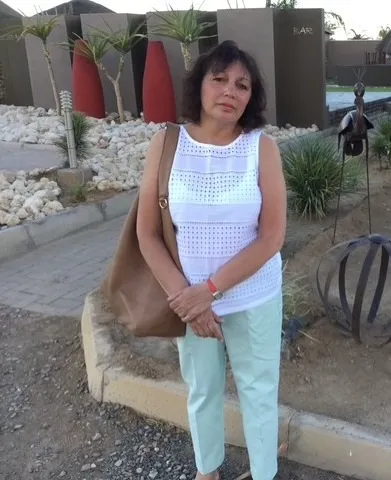
Caron Board, 68, who has prediabetes, has supported her husband with his type 2 diabetes since his diagnosis with dementia in 2023. She shares her experience. 

Diagnosis

It's hard to separate both conditions

When my husband, Donald, now 85, got his mixed dementia diagnosis in April 2023, I soon realised that I couldn’t separate the condition from his type 2 diabetes. 

If he has either high or low blood sugar levels, he gets more confused now that he has dementia. And his appetite has also changed, so it makes carb counting more difficult when I’m helping him with his insulin doses.

So I feel as if both conditions I’m supporting him with are closely linked because they have an impact on each other.

The other problem with Donald’s diabetes is that he doesn’t get any hypo warning signs

So it’s a constant case of keeping an eye on his blood sugars and making sure he takes the correct dose as it’s complicated for Donald to manage his diabetes now.

Treatments

Diabetes tech and routine are key

Routine is definitely important for Donald - not only for his dementia, but also to help us manage his diabetes. Donald is on a CGM (continuous glucose monitor) which helps me in managing his blood sugar levels. 

I prepare his smart insulin pen, and his healthcare team has supported me on the doses to make it easier  to manage. 

At the moment, Donald can inject himself. Although he has lived with his diabetes for more than 20 years, injecting is more of a challenge for him now. He forgets as soon as he’s had his insulin dose. 

The smart insulin pen is brilliant, as I can look at it and see that he’s taken his dose and how long ago. Or that he hasn’t remembered to take it. 

But the other day when I came in, Donald didn’t know how to change the cartridge, and he’d just left it. 

Now I'm arranging for a care agency to support me so that I can go out, but paid carers aren't able to administer insulin without training. So we'll have to see how that works out and also if Donald copes OK.

Emotions

Taking care of myself

I was diagnosed with prediabetes, so I’m mindful that I need to keep physically active and have a healthy, balanced diet

Now I’m better at making sure I get out for a walk. It’s good for my physical and mental health.  

I know I need to do something to look after myself because supporting someone with dementia, alongside their diabetes, can affect you emotionally.

Seeing Donald's health deteriorate is very difficult.

I am part of a carers support group where we can talk about our experiences as carers and let off steam. It’s nice to get together and chat. 

Sometimes there are things to share, but it’s just having time to forget everything and to support each other as carers is so important. 

I come away recharged and mentally refreshed. Having your own network of support is vital when you’re supporting someone.

I’ve learnt to let things go. 

Donald has also become more resistant to change in routine, which can be challenging when I’m trying to support him in managing his diabetes. Accepting care from the care agency is also something he’s resisting.

I no longer let little things bother me. It was something I learned from the support group. Now that Donald has dementia, he becomes convinced that I haven’t given him his insulin dose and that the smart pen is wrong.

But there is no point in arguing because it’s not going to change anything for me – Donald still has dementia and diabetes. And all arguing would do is wind us both up, and it doesn’t get us anywhere. 

It’s made me more tolerant and understanding of other people, too. 

Back to Top
Brand Icons/Telephone check - FontAwesome icons/tick icons/uk