Diabetes can cause complications that can become serious. So having diabetes health checks are important. They can pick up health problems in the early stages so they can be monitored and treated.
Diabetes health checks — known as your yearly or annual review — are part of your routine NHS treatment. There are 9 diabetes health checks.
Some checks may happen more than once a year. But you should always be offered these checks as part of your annual review.
These are the diabetes health checks
| Blood tests and lab checks | Checks at your appointment | Screening done elsewhere |
| HbA1c (average blood sugar) | Blood pressure | Diabetic eye check |
| Cholesterol (blood fats) | Weight and height to find BMI (body mass index) | |
| Kidney function (blood test) | Foot check | |
| Kidney disease (urine test) | If you smoke |
Download our one-page guide Diabetes health checks (PDF, 57KB) or print it off to keep with you.
Your GP surgery should get in touch with you to arrange the appointment for your annual review. Set yourself a reminder each year. If you don't hear from them, please ring up for an appointment.
Don't feel guilty about chasing up appointments. This is routine NHS care that GPs and hospital teams should set aside time for. The health checks monitor how diabetes is affecting different parts of your body and help keep you healthy.
If you’ve been finding it hard to manage your blood sugar levels, be kind to yourself. Don't be tempted to skip your health checks. Instead, see appointments as an opportunity to be as honest as you can with your healthcare team – and ask for help.
What diabetes health checks should I be getting at my annual review?
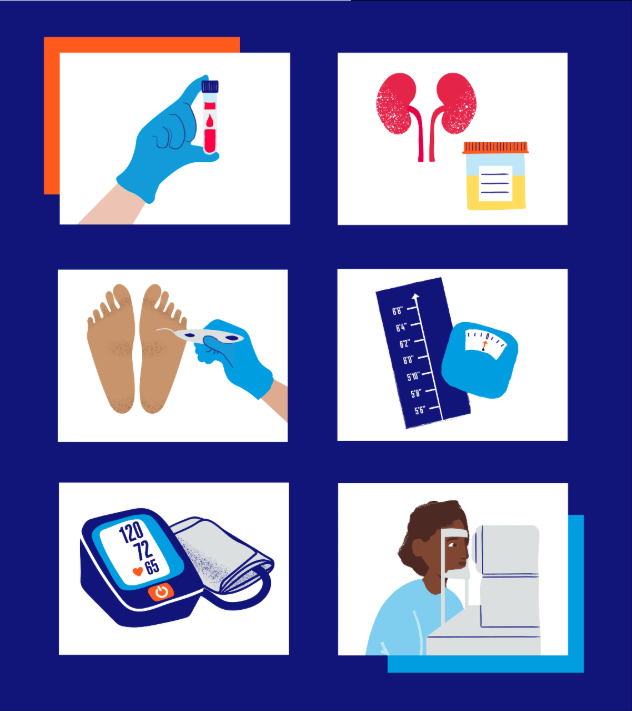
As part of your annual review, these are the health checks you should be offered:
A blood test where enough blood is taken to be sent to the lab to check your:
- HbA1c - your average blood sugar levels for the past three months.
- Cholesterol levels - how much fat is in your blood.
- Kidney function - how well your kidneys are working.
You should be asked to provide a urine sample that is sent to the lab to check:
At the appointment you should also have:
- A foot check. In Scotland, a foot check may be every two years if your last check showed no problems.
- Your weight and height measured to work out your Body Mass Index (BMI).
- Your blood pressure measured.
Your healthcare team will also ask if you smoke, so you can be offered help to stop.
Usually at a separate appointment somewhere different, you should also be invited to:
- A diabetic eye check. This is the not the same as a sight test at the optician. Instead, photos are taken of your eyes to see how diabetes is affecting them. Diabetes can damage the blood vessels and cause an eye problem called diabetic retinopathy. If your last diabetic eye check was clear, you may be offered the check once every two years.
Why are diabetes health checks important?
Diabetes can affect different parts of the body. Diabetes health checks can spot problems before you have symptoms. This means you can get treatment in the early stages. This can help prevent or lower your risk of serious health problems from high blood sugar levels. These include sight loss, toe or leg amputations, kidney disease, heart attack and stroke.
Watch our video below - Why are diabetes health checks important? (British Sign Language, Audio)
It also tells you what diabetes health checks you should be getting, and what to do if you're not invited to a health check. It was made for people with diabetes in the deaf community by Diabetes UK with Royal Cornwall Hospitals Trust.
Read or download our free easy ready guide from our shop Why diabetes check-ups matter (available in 11 languages).
See below the most common diabetes heath checks people miss out on — and tips to make sure you get them.
Diabetes health checks people are more likely to miss out on
These are the checks that people with diabetes are most likely not to get:
- A urine check for kidney diseas
- Diabetic eye check
- Foot check
Find out some of the reasons why people aren't getting these checks and tips to help you get them.
Providing a urine sample to check for kidney disease
Lots of people miss out on this check because providing a sample of your wee isn't always easy.
You might be sent a bottle to wee into at home or have to provide a sample on the day of the appointment. Some people find this stressful but also a bit messy. Equally, carrying around a urine sample all day if you’re going to work isn’t practical.
Tips to make providing a urine sample easier
- Ask the healthcare professional doing the check for flexibility. If you need something bigger to wee into or if you’d rather take the bottle home to do the sample, do ask.
- If you’re worried about the sample spilling, make sure the lid is on safely. You could try wrapping tissue around the sample bottle or putting it into sealed bag.
Another reason people may not get this test, is because they may not be sure what the kidneys do and why the check is needed. Find out below:
Why is this test important?
One of the main jobs of your kidneys is to filter your blood. They get rid of extra fluid and waste products from your body when you wee. Diabetes can cause kidney disease, known as known as diabetic nephropathy. In the early stages, there may be no symptoms. So, it’s important to have your urine tested. If kidney disease is detected, treatment can be given to stop it getting worse.
Getting a diabetic eye check
Lots of people miss out on a diabetic eye check for different reasons.
Tips for getting a diabetic eye check
- If nothing is wrong with your sight, you may think you don't need a diabetic eye check.
This is not the case. Diabetes can cause eye damage before you notice any sight changes. So regular eye checks can save your sight.
- You're worried about the results of this check more than the other tests.
If diabetes is affecting your eyes, you can get treatment to delay or prevent it altering your sight. Remember that this isn’t a sight test, so you won’t have the expense of buying new glasses, if that is also a worry.
- Your appointment is at a different clinic with a different team, not at your GP surgery or hospital.
If you’re unsure about the check itself or going to a new place, you could ask a neighbour, friend or relative to go with you.
Remember you won’t be able to drive after your appointment. You're often given eye drops to help make the photo of your eyes clearer. This can make them blurry for a while afterwards.
If the appointment is hard to get to by public transport, ask if there are other eye check clinics that are easier to get to. Speak to your eye check provider or GP.
If you are housebound, ask your eye check provider or GP how you can access these appointments.
- You haven't been invited to a diabetic eye check
If you aren’t getting diabetic eye check appointments, contact your GP or hospital team. They can refer you to your nearest eye check service.
"Having my eyes checked prevented me losing my sight as problems with a build-up of fluid around my retina and issues with my blood vessels were caught early. I was able to get treatment before any lasting damage".
James, who has type 1 diabetes Read his story.
Getting a foot check
Foot checks often get missed out because there may not be time at your annual review appointment. You need a foot check even if you haven't noticed any changes to your feet.
Tips for making sure your feet are checked
- Speed things up by wearing something that's quick and easy to take off and put back on. So, for example wear socks instead of tights and shoes that are easy to remove.
- If there isn’t time for a foot check, do insist on a follow-up appointment. It isn’t enough for you to have checked them yourself.
- If you’re worried about your feet not being clean or smelling as you'd like, please don't worry. Remember, the person checking your feet is a trained professional. They have seen it all before and will not mind.
Other possible reasons people may not get their diabetes health checks
Having to repeat the checks
If you're offered the same checks at a hospital diabetes service and at your GPs, it can be frustrating. To stop this, if your hospital team do the check-ups, ask them to send the information to your GP. And ask your GP to add any test results from the hospital to your records.
Fear of being judged
If you don't get on with your healthcare professional or you feel they judge you, it may be harder to go to appointments.
You could ask if it's possible to see a different healthcare professional for your checks. Or if it’s not, you may think about whether you want to change your GP practice.
We are working with healthcare professionals to raise awareness of the impact on stigma on people living with diabetes. If you need to talk to someone about your experiences at appointments, you can talk to one of our helpline advisors on 0345 123 2399. It’s important that stigma is not a barrier to getting the care that you need.
Worry about starting medication
The thought of having to start or change medication for some can be a worry especially if you read about the side effects.
But there are now several different types of medications to manage complications or treat type 2 diabetes. If you don't like how a medication is making you feel, talk to your diabetes team about what medications may be best.
Prioritising other things above your health
It can be hard to make time for your health checks, especially if you are not sure why they are important.
Busy lives can mean you prioritise work, family or other life pressures. We know diabetes-related health problems can come on quicker in younger people. So it's important to take time out to make sure your health is being looked after.
If you work, check your organisation's policy on time off for medical appointments and managing long term health conditions. Let your line manager know that the checks are necessary because they help keep you healthy.
Should my annual review include a medication review?
Your doctor should check what medications you are taking in your annual review appointment. If they already have this information they may not ask you about it.
If you have any worries or questions about medications you are taking, do do ask in this appointment.
It can be helpful to take a notebook with you with things you'd like to ask or to make a note of any answers.
Find out what other NHS care to expect
Type 1 diabetes
Everyone living with type 1 diabetes should have access to:
A review of the diabetes knowledge you already have and would like to have.
Advice about your diet from a dietitian.
A thyroid function blood test.
A chat about diabetes technology offered locally that could help you. You should be offered a continuous glucose monitoring if you would like it. You may be eligible for an insulin pump if you are not meeting your targets.
Support from specialists who can help you manage your medication and blood sugars around physical activity.
A yearly flu vaccine
Advice about the importance of having regular dental checks.
For more information, read or download a copy of our free What care to expect for type 1 diabetes from our shop.
Type 2 diabetes
Everyone living with type 2 diabetes should have access to:
Support to lose weight if you want or need to.
Advice on physical activity.
Technology to monitor your blood sugar levels if you use insulin to manage your diabetes, like a continuous glucose monitor if you meet certain criteria.
A yearly flu vaccine
Advice about the importance of having regular dental checks.
For more information, read or download a copy of our free What care to expect for type 2 diabetes from our shop.
Gestational diabetes
See our page on gestational care to see what support and checks to help look after you and your baby.
For more information, read or download a copy of our free What care to expect if you have gestational diabetes from our shop
Find out about additional NHS care for diabetes if needed
Other types of support
NHS care to expect for diabetes if you need it
There are some diabetes checks and appointments that you should have access to but not everyone will need. Speak to your healthcare team if you think you need any of this help but aren’t getting it.
Everyone with diabetes should have access to:
An HbA1c check every three to six months if you’re struggling to meet your targets.
The chance to meet and get support from other people living with diabetes.
Good quality care with access to diabetes specialists if you’re in hospital, including access to mental health support if needed.
Pre-pregnancy review if you’re planning to have a baby, and advice from specialists at least 12 weeks before stopping contraception.
Regular reviews at least every two weeks by the diabetes team during pregnancy.
Support with sexual health concerns.
A review of your emotional health and wellbeing needs.
A review and update of your management plan.
Appointments in a way that you prefer, whether that’s by phone or face to face, or reviewing your blood sugar levels with your healthcare team online, for example.
Specialists who can help you manage any diabetes complications.
NHS care to expect when you're first diagnosed
Checklist
Everyone living with diabetes should have certain checks and appointments when they’re first diagnosed with diabetes, to make sure you understand your condition and can live well with diabetes. If you didn’t have any of these when you were first diagnosed, speak to your healthcare team.
Everyone living with type 1 diabetes or type 2 diabetes should have:
A full assessment of your medical history, and anything going on in your personal life that might affect your diabetes.
A referral to a diabetes group education programme that works for you and your cultural background, or the same type of education in a one-to-one appointment if you prefer. This should be within a year of diagnosis if you live with type 1 diabetes.
Information about the medical exemption form for free prescriptions if you live in England. You don’t need this in Northern Ireland, Scotland, and Wales as prescriptions are free for everyone.
Within six months of being diagnosed with type 1 diabetes, you should have:
An individual diabetes management plan, discussed and agreed on with your healthcare team, that works for you and your cultural background, including your personal targets, contact details for your diabetes team and follow-up plans.
Detailed information on how to live well with type 1 diabetes including giving your insulin, counting carbohydrates, managing hypos, managing when you’re ill, physical activity, and DVLA requirements for driving.
A review with a dietitian.
Your antibodies measured to confirm your diagnosis if it’s not clear what type of diabetes you have.
When you’re diagnosed with type 2 diabetes, you should have:
If it’s right for you, a discussion about weight management or weight loss and type 2 diabetes remission, which is when your average blood sugar levels are no longer in the range for diabetes and you don’t need medication.
A review of your emotional wellbeing and mental health needs.
A review of your medication.
A summary of your agreed diabetes management plan and when it should be reviewed again.
What if I’m not getting the NHS care I need?
Sometimes it might be difficult to get the standard of care you should expect.
If you don’t think you are getting the diabetes health checks or care you should be, speak to your healthcare team. Make a list of things you'd like to discuss with them. You can also download our free leaflet What care to expect when you have diabetes to take along.
If that doesn't help, you may want to make a complaint - see the links below.
If you’re still not happy with the care you’re getting, you can ask for your diabetes care to happen at a different clinic or hospital.
- How to make a complaint about NHS care in England
- How to make a complaint about NHS care in Northern Ireland
- How to make a complaint about NHS care in Scotland
- How to make a complaint about NHS care in Wales
You can also talk things through with our helpline on 0345 123 2399.
Here's how we ensure our content is accurate and reliable by PIF standards