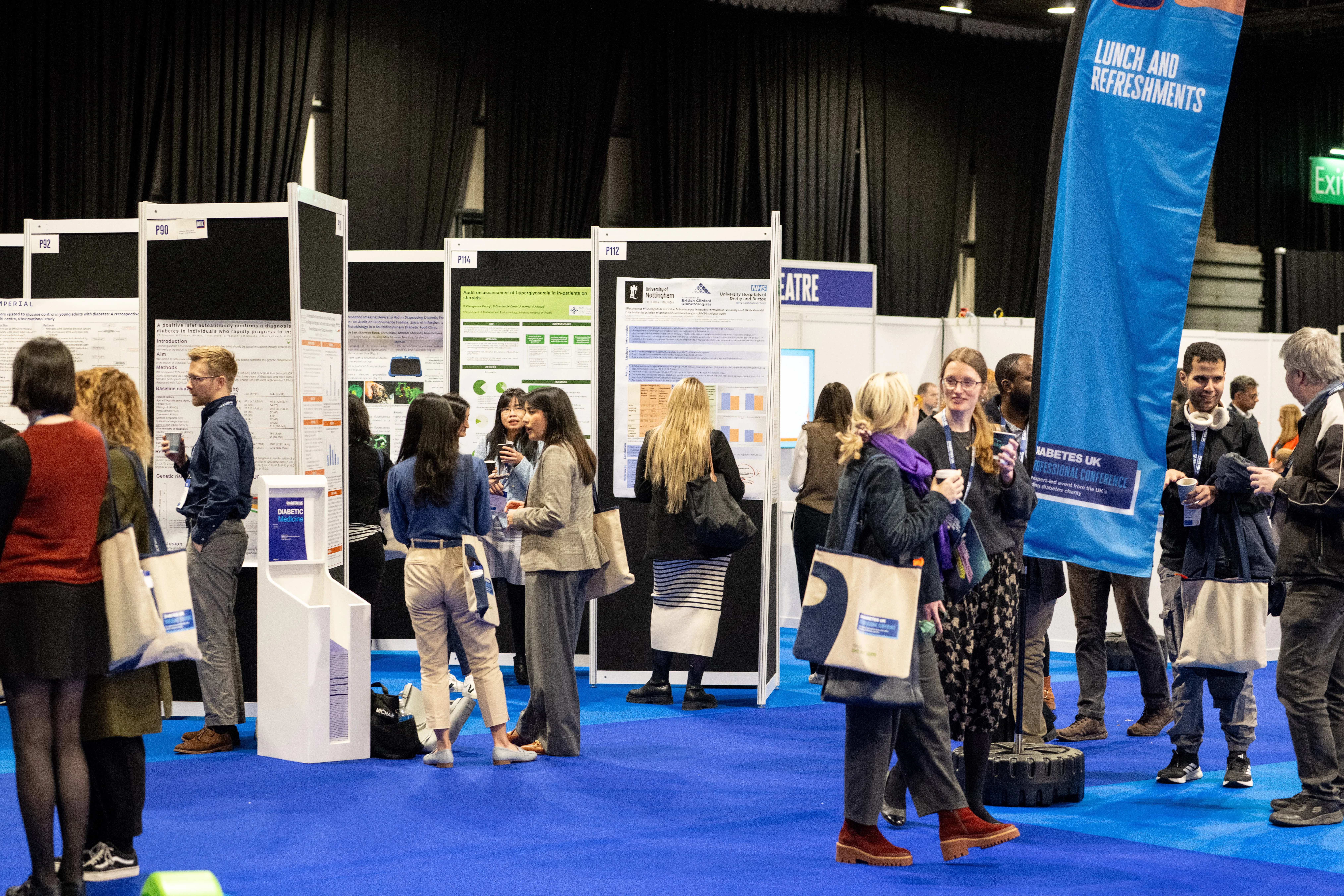
Our annual professional conference (DUKPC) brings together thousands of healthcare professionals and scientists to learn, connect, and be inspired. From major trials to early studies, here's some of the latest research shared at the event.
In this article:
- Continuous glucose monitoring could transform lives for people with type 2 diabetes
- Women's experiences managing menopause in type 1 diabetes
- Protecting beta cells in type 1 whilst there's still time
Continuous glucose monitoring could transform lives for people with type 2 diabetes
A new UK trial has found that continuous glucose monitoring (CGM) can significantly reduce blood sugar levels in some people with type 2 diabetes compared with traditional finger-prick testing.
The findings were presented at DUKPC and published in the Lancet Diabetes and Endocrinology.
The trial, called FreeDM2, was led by Dr Lala Leelarathna from Imperial College London and Dr Emma Wilmot, University of Nottingham and University Hospitals of Derby and Burton NHS Foundation Trust.
FreeDM2 recruited 303 adults with type 2 diabetes who were using basal (long‑acting) insulin. All participants had HbA1c levels above recommended targets at the start of the trial. Participants were randomly assigned either to use a real‑time CGM or to continue using finger‑prick tests.
For the first 16 weeks of the study, participants managed their type 2 diabetes themselves using the monitoring method they were assigned. During the following 16 weeks, they reviewed their blood sugar levels with healthcare professionals, who could adjust treatment or add new type 2 diabetes medications if needed.
Blood sugar benefits
At the start of the study, average HbA1c levels were the same in both groups: 73 mmol/mol, or 8.8%.
After 16 weeks, people using CGM saw a greater reduction in HbA1c than those using finger‑prick testing. HbA1c fell by 9 mmol/mol (0.8%) in the CGM group. A reduction of this size is linked to a lower risk of long‑term diabetes complications. In comparison, HbA1c fell by just 2 mmol/mol (0.1%) in the finger‑prick group.
During this period there were no major differences in insulin doses between the two groups. This suggests the benefits came from people using the CGM data to better understand how food, physical activity and daily routines affected their blood sugar levels, and make small self‑management changes.
By 32 weeks, the benefits of CGM were maintained. Average HbA1c was 62 mmol/mol (7.8%) in the CGM group compared with 67 mmol/mol (8.3%) in the finger-prick group.
People using CGM also spent around 10% more of the day within their target blood sugar range, with no increase in hypos.
Crucially, those using CGM reported greater satisfaction and more confidence in managing their diabetes.
Evidence for wider access
The tech has already transformed care for people living with type 1 diabetes in the UK. But the role of CGM in type 2 diabetes had remained uncertain. This study now adds robust new evidence showing that CGM can also improve blood sugar management for people with type 2 who use insulin.
Dr Lucy Chambers, Head of Research Impact and Communications at Diabetes UK, said:
“For many people with type 2 diabetes, managing their condition means constantly balancing blood sugar levels with medications alongside everyday activities such as eating, sleeping and exercising. Continuous glucose monitoring (CGM) gives people a near real‑time picture of their blood sugar levels, which can be transformative, reducing the need for endless finger-prick tests and supporting safe, effective day‑to‑day management.
“This important study strengthens the case for expanding the use of CGM for some people with type 2 diabetes, though analysis is needed to confirm whether it would be cost-effective. It also reinforces the importance of ensuring that those with type 2 diabetes who are eligible for CGM according to current national guidelines are provided with it. Diabetes UK will continue to push for fair, equitable access to diabetes technology, alongside the support people need to use it effectively, so that no-one is left behind.”
Dr Emma Wilmot, FreeDM2 co-led, said:
“Both type 1 diabetes and type 2 diabetes are extremely challenging to manage, and the FreeDM2 trial highlights how CGM could help people with basal insulin treated type 2 diabetes. People I supported during the trial said use of CGM gave them new insights into their diabetes management, with many describing it as ‘life changing’. We hope more people living with type 2 diabetes will benefit from these findings in the future.”
Women’s experiences managing menopause in type 1 diabetes
Our Diabetes Research Steering Groups highlighted the lack of research around diabetes and the menopause, and heard how important this issue was to people with diabetes. As a result, we funded Professor Vivien Coates to run an urgently needed study.
At DUKPC, Professor Coates and team presented some of their findings. They held focus groups and interviews with 32 women living with type 1 diabetes aged 36-65 years to understand their experiences of managing diabetes during perimenopause and menopause, and their interactions with healthcare professionals.
The research revealed that women felt unprepared for the reality of managing diabetes alongside menopause symptoms. Participants described menopause as a perfect storm, where fluctuating hormones, diabetes management and daily life pressures combined to negatively affect physical health, mental wellbeing, work and relationships.
Women often felt that a key contributor to this was a lack of guidance and support from health professionals, due to inadequate evidence-based information.
The research also showed that many women felt the responsibility for managing diabetes during menopause rested largely on their own shoulders. Participants described feeling dismissed or gaslit by health professionals, and said they often felt better understood by other people living with diabetes instead.
The findings reinforce the urgent need for better clinical guidance for managing type 1 diabetes in menopause so diabetes care teams can give more proactive, evidence-based support.
They also highlight the importance of healthcare professionals’ attitudes and communication styles, showing that taking an empathic, person-centred approach could alleviate some of the negative experiences that women with type 1 face during menopause.
Protecting beta cells in type 1 whilst there’s still time
Dr Steven Millership from Imperial College London shared early research looking at new ways to protect insulin‑producing beta cells in people at the earliest stages of type 1 diabetes.
We know that type 1 diabetes develops when the immune system mistakenly attacks beta cells. This process happens gradually, over months or years. This creates a window, before too many beta cells are destroyed, to interrupt the attack and protect them.
Researchers are increasingly learning that what’s happening inside beta cells may influence how vulnerable they are to immune attack. In their study, Dr Millership and Diabetes UK-funded researchers at the University of Exeter explored whether helping making beta cells healthier could keep them safer.
They tested a range of drugs that affect how beta cell genes are switched on and off. From this, they identified one drug that helped beta cells in the lab work and cope with stress better. They traced these benefits to the drug’s action on a protein called HDAC6, which appears to act like a brake on beta cell health.
Blocking HDAC6 switched on genes that helped beta cells produce more insulin production and behave more like healthy, fully developed cells. Importantly, it also reduced signals on the surface of beta cells that help the immune system recognise and target them.
This research is still very early and isn’t a treatment yet. But it suggests that treatments targeting HDAC6 could one day help beta cells work better and become less vulnerable to immune‑driven damage in early type 1 diabetes.