
More than 16,000 diabetes experts met in Milan for the annual European Association for the Study of Diabetes (EASD) meeting, to share the latest discoveries from their labs, clinics and trials.
Researchers discussed studies that could help prevent type 1 diabetes, develop new treatments for type 2 diabetes, and innovate better diabetes technologies. Here are some of the highlights that caught our attention.
On this page:
- A tipping point in type 1
- Saving beta cells in type 2
- Lose weight, keep muscle
- Innovations in diabetes technology
- Closing the women's health gap
- Exercise for remission
- Could AI help spot diabetes and its complications?
- Improving care during pregnancy
A tipping point in type 1
Type 1 diabetes has typically been diagnosed and treated only after symptoms appear, often when someone becomes seriously unwell. But decades of research have brought us to a tipping point where this is beginning to change.
Opening the conference, Professor Anette-Gabriele Ziegler set the scene, highlighting the growing wave of research aiming to intervene at different points in the development of type 1 diabetes.
Scientists are exploring approaches across the entire journey of type 1 diabetes, from identifying people at genetic risk, to stopping the immune system's attack before it starts, to slowing progression once that attack is underway. It's an increasingly exciting pipeline. Following the approval of teplizumab, the first immunotherapy shown to delay progression of type 1 diabetes, the door is now open for a new generation of treatments to follow.
As these treatments emerge, identifying people at risk is becoming increasingly important. One of the biggest areas of focus throughout the EASD was type 1 diabetes screening.
Researchers from eight countries part a Europe-wide research programme, called EDENT1FI, shared results from pilot programmes were more than 140,000 children and young people were screened. Of these, 627 (0.45%) were found to have early-stage type 1 diabetes and the research showed that childhood population screening is both feasible and effective.
Results from our ELSA study in the UK fed into EDENT1FI and ELSA is continuing to generate vital evidence on how childhood screening for early-stage type 1 diabetes could work in practice in the UK.
A diagnosis of type 1 diabetes may not yet be preventable. But for the first time, we're firmly on the path towards changing its course. Through our Type 1 Tipping Point campaign we’re calling on government to make sure this opportunity isn’t missed.
Saving beta cells in type 2
In type 2 diabetes, over time beta cells can become damaged and can die off. Finding ways to protect or restore them could help people make more of their own insulin again and move us closer to a cure.
Researchers in Japan investigated why the risk of type 2 diabetes increases as we age. Older beta cells show signs of stress and are less able to renew themselves. Their work showed a protein called NUPR1 appears to play a key role in this process. In lab studies, reducing NUPR1 helped ageing beta cells survive and multiply more effectively.
While this work is still at an early stage, it helps explain one reason why beta cells struggle in type 2 diabetes and may point towards new future treatments that keep beta cells healthy.
We also heard about a new drug that targets a protein called menin. Menin acts like a brake, limiting the growth of beta cells. KO-7246 is an experimental drug designed to release that brake and encourage beta cells to regenerate. Researchers found KO-7246 helped human beta cells survive and multiply in the lab, and lowered blood sugar levels in mice.
This is very early-stage research, but it’s an exciting avenue that in the future could lead to transformational new treatments that bring back beta cells in type 2 diabetes.
Lose weight, keep muscle
The arrival of GLP-1 medications has transformed the conversation around type 2 diabetes and weight management. They’re helping people living with type 2 and overweight or obesity lose substantial amounts of weight – usually from both body fat and muscle.
Muscle does much more than help us move. It improves insulin sensitivity, supports healthy bones and plays an important role in healthy ageing. Losing too much muscle during rapid weight loss may have unintended consequences. Several studies at EASD focused on improving what researchers called the quality of weight loss.
One of the most talked-about findings involved a new medication – trevogrumab. Researchers in the US combined trevogrumab with the GLP-1 semaglutide. In a trial involving 975 people living with obesity, they found this combination reduced muscle loss by around half, compared with semaglutide alone. Preserving muscle could help people stay healthier while still benefitting from substantial weight loss. But we need more research to fully understand the impact this combination of medications could have on health outcomes.
We also heard early findings on a next-generation medication called COR-139 that targets four different hormone pathways at the same time: GLP-1, GIP, amylin and calcitonin. In animal studies, it produced greater weight loss than current treatments while helping preserve lean muscle. Clinical trials with people with obesity are due to start this year.
This work shows how weight management research is evolving beyond simply reducing body weight and toward helping people lose the right kind of weight.
Innovations in diabetes technology
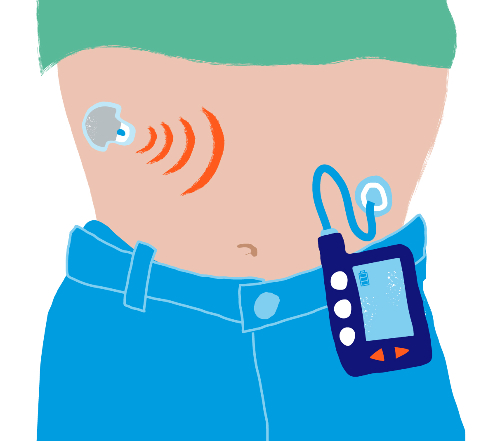
As technology continues to transform life with type 1 diabetes, researchers are working on the next generation of closed loop systems.
With our funding, PhD student Chloe Royston is studying fully closed loop systems at University of Cambridge. A fully closed loop avoids the need for people to input carb counts to receive a mealtime insulin dose. Chloe shared her work exploring why the tech helps some children and adults with type 1 spend more time in range than others. Her research suggests factors including age, body mass index and how people use system can help explain time in range differences. These insights will be important as our researchers work to improve the performance of fully automated systems.
Another area generating excitement is the development of dual-hormone fully closed loop systems. While current tech delivers insulin, dual-hormone systems add a second hormone, glucagon, which raises blood sugar when levels begin to fall.
A research team from the Netherlands presented a trial involving 243 adults with type 1 diabetes testing a dual-hormone system over 12 months. The system improved time in range compared with multiple daily injections, but it did not outperform the latest hybrid closed loop systems. Severe hypos were also more common in the dual-hormone closed loop group.
These studies show more work is needed to finetune the next generation of closed loop tech. But point towards an exciting future direction where diabetes management happens increasingly in the background, instead of demanding constant attention.
Closing the women's health gap
Women's health featured prominently throughout the conference. Researchers highlighted how major hormonal transitions, including the menstrual cycle and menopause, can influence diabetes management in ways that are still not fully understood.
One study in Switzerland looked at data from 380 menstrual cycles in people with type 1 diabetes who were using hybrid closed loop systems. The results showed insulin sensitivity, insulin needs and blood sugar control changed throughout the cycle, with insulin needs typically increasing during the mid-luteal phase.
The researchers flagged this leaves an important gap: current clinical guidelines and closed loop systems don't account for how hormonal changes across the menstrual cycle can affect diabetes management, leaving women without the care they need.
At the same time, researchers called for greater attention to menopause, describing it as a critical transition that affects cardiovascular, metabolic, bone and muscle health. Women living with diabetes already face an increased risk of problems in many of these areas, and the hormonal changes that accompany menopause can increase those risks further – while also impacting their blood sugar management.
Better understanding and support during this life stage is essential to help women manage these challenges more effectively.
Exercise for remission

Scientists reported breaking results from the RESET for REMISSION trial. This study built on the groundbreaking work of our DiRECT study, which showed weight loss through a low-calorie diet could help some people with type 2 diabetes go into remission.
With diagnoses of type 2 diabetes rising sharply in younger people, the RESET team set out to test an approach that combined a low-calorie diet with structured exercise in younger adults. They wanted to know whether adding exercise could give additional benefits for this younger group – who can have a more aggressive form of the condition – by helping them preserve muscle mass and lower their risk of diabetes complications.
Ninety-six participants living with type 2 diabetes and obesity aged between 18-45 years took part in the trial. One group received the new intervention combining 12 weeks of a low-calorie diet with twice-weekly structured exercise sessions, involving aerobic and resistance exercise. For another 12 weeks after this, the group then followed a weight-maintenance diet and followed an at-home exercise plan. The other group followed standard type 2 diabetes care.
Six months after entering the study, almost half of participants who received the diet and exercise intervention were in remission, compared with just 4% of those receiving usual care.
Average weight loss was 8.4kg in the intervention group and 1.2kg in the control group. Importantly, those in the intervention group largely maintained their muscle mass despite substantial weight loss. They also reduced harmful liver fat, improved their fitness and reported better quality of life.
These additional benefits may be particularly important for younger adults attempting remission, who often have a more aggressive form of the condition and face a higher lifetime risk of complications.
The RESET researchers said: “Preserving muscle during remission-oriented weight loss may have important implications for long-term metabolic health, physical function, and disease trajectory. This requires examination in a longer-term study.”
Could AI help spot diabetes and its complications?
Artificial intelligence is increasingly threaded throughout all areas of diabetes research. At EASD, we heard about studies suggesting AI could help identify diabetes and its complications more quickly and conveniently.
One team reported that a short, 20-second voice recording could help identify people at increased risk of type 2 diabetes. Researchers trained an AI tool using voice recordings from over 60,000 people with and without diabetes. The tool was able to identify patterns in speech associated with the condition. It gave a higher risk score to individuals living type 2 diabetes than to those who didn’t have the condition 80% of the time.
In future, tools like this could help identify more people who may benefit from diagnostic blood tests. But they will need rigorous testing to ensure they work accurately across different groups and don't miss people who need further investigation.
Giedrė Čepukaitytė, Research Scientist at tech company thymia, said, “This has the potential to change what screening looks like. A speech sample can be taken over the phone or through an app, so we can reach far more of the people who need a blood test than current pathways do.
“Our next step is to test the model in clinical settings and to understand how well it works for every group of people, because a screening tool has to work for everyone.”
Elsewhere, researchers tested AI systems designed to identify diabetic retinopathy from retinal photographs taken without the use of eye drops that dilate the pupils. AI correctly identified all cases of sight-threatening eye problems and could potentially make screening more accessible for people who may not attend regular eye screening.
While more work is needed before these tools become routine, they offer a look at how AI may help make care more accessible while reducing pressure on healthcare systems.
Improving care during pregnancy
With rising rates of type 2 diabetes in younger adults, more women are going through pregnancy with the condition than ever before. Yet major questions remain about how best to support them.
Diabetes UK-funded researcher Professor Claire Meek presented work examining research gaps and priorities in this field. Her team reviewed existing evidence and found that women with type 2 diabetes, particularly before and after pregnancy, are underrepresented in research studies aiming to improve care and health outcomes. They also explored the experiences of women with type 2 in pregnancy. Many described significant emotional, practical and healthcare system challenges throughout their pregnancy journeys, highlighting the need for more joined-up, person-centred support.
But the team also identified opportunities to improve pregnancy outcomes, including improving access to pre-pregnancy care and supporting healthy weight gain during pregnancy.
Walking through the conference halls in Milan, one message came through clearly: diabetes research is pushing forward on all fronts, and Diabetes UK researchers are helping to drive that momentum.