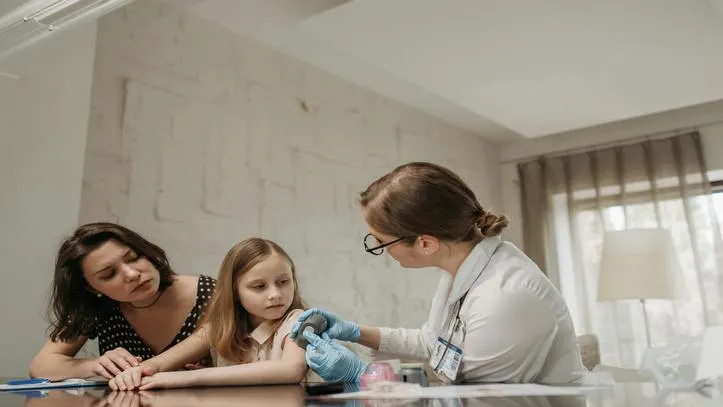
Our landmark ELSA study (Early Surveillance for Autoimmune diabetes) has shown that childhood screening for type 1 diabetes works.
The findings from ELSA’s first phase signal a major step towards a future in which type 1 diabetes can be detected early, managed proactively, and potentially delayed through immunotherapy.
Building on this, we’ve launched the next phase of ELSA – expanding screening to include all children aged 2 to 17 years.
Early detection
For too many families, a child’s type 1 diabetes diagnosis happens in a sudden, frightening way. Over a quarter of children aren’t diagnosed until they are in diabetic ketoacidosis (DKA), a potentially fatal condition that requires urgent hospital treatment.
But this doesn’t have to be the case. Spotting type 1 diabetes early – before too many insulin-making cells have been destroyed or symptoms have developed – can dramatically reduce emergency diagnoses. It could also give children access to new immunotherapy treatments that can delay the need for insulin therapy for years.
A first-of-its-kind
Launched in 2022 and co-funded by Diabetes UK and Breakthrough T1D, ELSA is the first UK study of its kind. It set out to test the feasibility of a childhood screening programme to detect type 1 diabetes early.
Professor Parth Narendran and his team at the University of Birmingham tested blood samples for autoantibodies, signs of the type 1 diabetes immune system attack that can appear years before symptoms. The risk of type 1 diabetes rises sharply with the number of autoantibodies found.
Children without autoantibodies are unlikely to develop type 1 diabetes. Those with one autoantibody have a 15% chance of developing the condition within the next 10 years. For children with two or more autoantibodies, it is almost certain they will eventually need insulin therapy. This is known as early-stage type 1 diabetes.
ELSA’s findings
The team analysed resulted from the first 17,283 children aged 3 to 13 years who they had screened for type 1 diabetes. They found:
- 75 had one autoantibody. This signals an increased future risk of type1.
- 160 had two or more autoantibodies but did not yet require insulin therapy. This means they have early-stage type 1 diabetes.
- 7 were found to have undiagnosed type 1 diabetes with all needing to start insulin immediately.
Crucially, ELSA also revealed that families are happy to take part in type 1 diabetes screening. More than 37,000 families have already signed up to the study, demonstrating strong public support. This includes many without any prior connection to diabetes. This matters, because most children diagnosed with type 1 diabetes have no family history.
ELSA also explored the emotional impact of screening. Understandably, many parents initially felt anxious when their child screened positive for autoantibodies. But the research found that education and ongoing monitoring and support, provided through ELSA, helped families feel informed and prepared for the eventual progression of type 1 diabetes, easing their anxiety.
Early detection can also make sure children can promptly start on insulin therapy as soon as they need to, reducing the chances of DKA.
Taken together, the findings show that a type 1 diabetes autoantibody childhood screening programme is workable in the real world.
Screen to intervene
Some families were also offered teplizumab, the first ever immunotherapy for type 1 diabetes. It can delay the need for insulin by around three years in people with early-stage type 1 diabetes.
Teplizumab was licensed in the UK in August 2025, but it’s not yet routinely available on the NHS. Before licensing, a small number of people received teplizumab through a managed access programme run by the manufacturer.
Amy Norman discovered via ELSA that her 11-year-old daughter, Imogen, is in the early stages of type 1 diabetes. Imogen was later able to access teplizumab.
Amy said:
“Being part of the ELSA study has helped us as a family to prepare for the future in a way we never expected. Knowing what’s coming – rather than being taken by surprise – has made an enormous difference to our confidence and peace of mind.”
You can read more on Amy and Imogen’s story.
The next phase
Diabetes UK and Breakthrough T1D are thrilled to award £1.5 million to fund the second phase of the research, ELSA 2.
ELSA 2 will expand screening, previously offered to those aged 3 to 13 years, to all children in the UK aged 2 to 17 years. And the researchers aim to recruit another 30,000 children.
ELSA 2 will also set up new NHS Early-Stage Type 1 Diabetes Clinics. They’ll provide families taking part in the study with clinical and psychological support, and create a clear pathway from screening to diagnosis, monitoring and treatment.
Lead researcher, Professor Parth Narendran, at the University of Birmingham, said:
“We are extremely grateful to all the families who have participated in the study and generously given their time to help understand how a UK-wide screening programme could be developed.”
Dr Elizabeth Robertson, Director of Research and Clinical at Diabetes UK, said:
“The ELSA study, co-funded by Diabetes UK, is generating the evidence needed to make type 1 diabetes screening a reality for every family in the UK. We’re incredibly grateful to the 37,000 families who’ve already signed up and urge others to get involved. Together, we can transform type 1 diabetes care for future generations.”
If you’d like to learn more or take part, visit elsadiabetes.nhs.uk