How to use our guide
Understanding your diet and eating healthily is an important part of your treatment for gestational diabetes.
It'll help you keep your blood sugar levels in the safe range so you’re more likely to enjoy a healthy pregnancy and give birth to a healthy baby.
If you are diagnosed with gestational diabetes you should be referred to a dietitian for individual advice. If this has not happened ask your maternity care team to refer you.
We have come up with some general tips and meal ideas to support you too. Our guide may also be useful if you're pregnant and have type 1 diabetes or type 2 diabetes — but for advice tailored to your needs, you'll need to speak to your healthcare team.
When you're pregnant, there are some foods and drinks you should avoid when you’re pregnant, including raw shellfish. See the NHS guidance.
1. Choose healthier carbohydrates (carbs)
All carbs affect your blood sugar levels, so you need to know which foods contain carbs.
The type and amount of carbs you eat or drink makes a difference to your blood sugar levels. The amount makes the biggest difference. And your dietitian will give you advice on the portion sizes that are right for you.
It’s important too, to choose healthier carbs.
Easy swaps for healthier carbs
- Swap white bread for multigrain, wholegrain, wholemeal, rye, linseed or pumpernickel.
- Swap chapatti and roti made with white flour to those made with wholemeal flour.
- Swap white pittas for wholemeal pittas.
- Swap chips and mash for wholemeal pasta, baked plantain or sweet potato.
- Swap white rice for brown or basmati rice.
- Swap cereals like Cornflakes and Rice Krispies for higher fibre options like porridge with jumbo oats, made with single cream and water.
Other healthier carbs
- Vegetables
- Pulses like chickpeas, beans and lentils
- Dairy like unsweetened yogurt and milk. If you are using a non -dairy milk, check they are unsweetened and fortified with vitamins and minerals.
- Fruit – it's best to eat fruit in-between meals and avoid smoothies and fruit juice.
You can check food labels when you’re looking for foods high in fibre if you’re unsure.
2. Cut down on sugar
Cutting down on sugar is important to keep your blood sugar levels in the healthy range.
Easy ways to cut down on excess sugar:
- Swap sugary drinks, energy drinks and fruit juices with water or decaffeinated tea and coffee.
- Try low or zero-calorie sweeteners, also known as artificial sweeteners, instead of using sugar.
- Know the other names for sugar on the food label. These are sucrose, glucose, dextrose, fructose, lactose, maltose, honey, invert sugar, syrup, corn sweetener and molasses.
3. Perfect your portion sizes
Use our tips on carb portion sizes.
This will help you manage your blood sugar levels and avoid too much weight gain during pregnancy. Talk to your care team about what weight gain is right for you.
Your weight may be monitored closely while you’re pregnant.
4. Plan for snack attacks
Spreading carbs out during the day, and not having a big portion in one go, can help keep your sugar levels stable between meals. If you do need to snack when you have gestational diabetes, swap cake, biscuits, crisps and chocolate for:
- Greek yoghurt topped with nuts, seeds or fruit such as an apple, pear or satsumas/tangerines.
- Unsalted nuts and seeds.
- Seeds and vegetables like cherry tomatoes, paired with chopped egg, meat or fish, which will have a small effect on your sugar levels.
- Two oatcakes with a matchbox-sized portion of cream cheese.
- A pot of sugar-free jelly.
But watch your portion sizes still – it’ll help you keep an eye on your weight.
5. Avoid diabetic foods
In 2016 the law was changed so that manufacturers are no longer allowed to label food as 'diabetic' or 'suitable for diabetics'.
They don’t have any special health benefits, they’re usually expensive, could still affect your blood sugar and may cause an upset stomach.
6. Understand the glycaemic index
The glycaemic index (GI) is a measure of how quickly foods containing carbs affect your blood sugar levels after you eat them.
Some foods affect sugars levels quickly and so have a high GI, and others take longer to affect blood sugar levels and so have a low GI.
To help you manage your blood sugar levels, go for carbs with a lower GI.
You’ll still need to think about your portion sizes. It’s the amount of carbs in the meal that will affect your blood sugar levels the most.
And not all low GI foods are healthy, so make sure you read food labels and make a healthy choice.
7. Manage your weight
If you gain too much weight in pregnancy it can make it harder to keep your blood sugar levels in the healthy range and can increase your blood pressure and affect your health.
However, evidence suggests that pregnancy isn’t the time to be on a really strict diet and you shouldn’t aim to lose weight.
Making changes to your diet and physical activity levels can help you avoid gaining too much weight, and your care team will help you with this. It’ll also help you keep your blood sugar within a safe range.
8. Eat more fruit and veg
Eating more fruit and veg as they’re full of nutrients. Aim for at least 5-a-day (for example, three portions of veg and two portions of fruit).
Frozen, tinned and dried fruit and veg all count.
Look for tinned fruit in juice rather than syrup, or tinned veg in water, with no added salt or sugar.
9. Cut down on salt
Don’t add salt to food or recipes and reduced processed foods with a high salt content. Too much salt can cause high blood pressure which can be especially risky if you’re pregnant.
Meal and snack ideas for gestational diabetes
Try to include protein foods and vegetables with each of your main meals, to help fill you up and help manage your sugar levels.
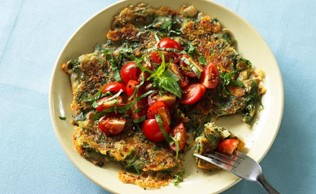
Breakfast ideas
You may need to split your usual breakfast into two sittings.
Many care teams recommend that you limit carbohydrate at breakfast to 15-20g and then have another 15-20g a few hours afterwards.
Women find having 40g at breakfast causes their sugar levels to go higher than their target levels. In practice this means a slice of toast at one sitting with the other a few hours afterwards.
- A bowl of jumbo oats made with single cream and water, or semi-skimmed milk.
- 2 slices of wholegrain toast with unsaturated low-fat spread or cream cheese, topped with chopped cucumber or eggs.
- A boiled or poached egg with salad and a slice of toast.
- A pot of yoghurt and nuts.
Or you could try making:

Lunch ideas
- An egg, cheese, fish or chicken salad sandwich, made with wholegrain bread or chapatti/roti made with wholemeal flour. You can pack it full of tasty, crunchy salad such as grated carrot, sliced tomatoes, cucumber and crisp lettuce.
- A small pasta salad, with plenty of veggies.
- Soup – containing lots of veggies and pulses – with a wholegrain roll. Some soup contains lots of added salt and sugar so check the label. Try our homemade chilli bean soup.
Or you could try making:

Dinner ideas
- Thai chicken stir fry
- Butternut and borlotti bean stew
- Roast mackerel with a curried coriander crust
- Slow-cooked bean chilli
- Aubergine stuffed with tofu, mushrooms and borlotti beans
- Aubergine and parmesan bake
- Italian style braised lamb steaks
- Channa dahl
- Chicken balti
Instead of rice, try serving dinners with our Cauliflower pilaf instead.
Get more recipe ideas
For each portion, you'll see how many carbs, sugars, fat, fibre, salt, fruit and veg portions, and calories there are.