Coping with a prediabetes diagnosis
It can be a shock to be diagnosed with prediabetes, and it may seem unfair. You may want to process the information for a week or two before you’re ready to think about the next steps.
If you don’t want to talk to friends or family about your diagnosis, do think about talking things through with one of our trained helpline advisors rather than coping with it alone. Call 0345 123 2399. Or reach out on our forum for support.
Main treatments for prediabetes
The main treatments are:
- Losing any extra weight, particularly around your middle.
- Eating a diet higher in fruit and vegetables and wholegrains and lower in processed foods and sugary drinks
- Increasing physical activity have been shown to help lower blood sugar levels so they return to a normal range.
Each of these things – if you’re not already doing them – can kick-start the hormone insulin to work better to control blood sugar levels.
It's important to break up long periods of time not moving. Research has shown lying down or sitting for long periods of time is linked with type 2 diabetes, even If you do the amounts of recommended physical activity.
If you're thinking of changing your diet, losing weight or trying a new physical activity, please speak to your GP first. They can also support you to make long-term health changes - see below.
Getting good quality sleep and if you smoke – stopping – have also been linked with a lower risk of developing type 2 diabetes. This is something to aim for if you’re trying to reverse prediabetes. See NHS stop smoking services to find local support.
Do doctors treat prediabetes?
If you’ve been given a diagnosis of prediabetes by your GP, they should let you know what the factors are that can lead to it developing into type 2 diabetes, and what changes you might be able to make to reduce your risk and signpost you to support.
Your GP should refer you to a free NHS type 2 prevention course or advice and referral to any relevant services such as weight loss support.
Your GP should be offering you a blood test to check your average blood sugar levels, also called HbA1c or fasting glucose, at least once a year. They should also offer to check your weight.
Medication and prediabetes
If you’ve made changes to your diet and physical activity to help you lose any extra weight and it hasn’t worked, your GP or other healthcare professional may recommend you take weight loss medication – depending on your weight category, known as Body Mass Index or BMI.
Your healthcare professional may also prescribe a tablet called metformin which helps the insulin your body produce work better to overcome insulin resistance. And help stop your blood sugar levels going up into the type 2 diabetic range.
Will prediabetes go away?
If you have prediabetes, your average blood sugar levels, known as your HbA1c, are between 42 and 47 mmol/mol.
Making small long-term health changes can help prevent your sugar levels rising further and tipping into the range for type 2 diabetes, which is 48 mmol/mol. These changes can also lead to you blood sugar levels returning to a normal level – which means prediabetes has gone away – known as reversing prediabetes.
But it’s important to know that your blood sugar levels can creep back up. If you’ve had gestational diabetes, it’s important to keep going for your annual blood test to check your HbA1c.
Weight loss and prediabetes
If you’re living with overweight or obesity, losing weight is one of the most important ways you can help manage your prediabetes.
Losing small amounts of weight can reduce levels of internal fat inside the liver and pancreas, helping them work better to help manage your blood sugar levels. Even a small amount of weight loss – 1% to 9% of your weight – can help lower your average blood sugar levels.
Adults tend to gain weight with each decade which can increase your blood sugar levels. So if your weight is still in the healthy weight BMI category but you've put on a few pounds, you may want to try and lose this. We know not everyone with prediabetes needs to lose weight.
Find out your weight category
To find out your weight category, use the NHS BMI tool.
If you are underweight, please note that losing more weight will not help you manage your prediabetes or reduce your risk of getting type 2 diabetes and it is not safe to try. You may be malnourished. It is important you see your GP so they can to find out the underlying cause and provide you with any treatment and support.
Even if you don't need to lose weight – or find it too hard to lose weight – a combination of dietary changes and increased physical activity, can help insulin work better to manage blood sugar levels.
See our tips on how to lose weight for prediabetes.
What’s the quickest way to treat prediabetes?
There’s no quick fix for prediabetes. It’s about making small long-term changes and setting realistic goals. If you’re living with overweight or obesity, losing weight is key to help managing your sugar levels so they return to a normal level, known as reversing prediabetes.
Should I buy a continuous glucose monitor (CGM?) for prediabetes?
We are not in a position to advise on the use or purchase of continuous monitors (CGM) by people without diabetes, which includes people with prediabetes.
Please note that a CGM can’t diagnose diabetes or prediabetes. Diagnosis can only be done by blood tests, which your GP can arrange.
There is very little published evidence on the use of CGM in people without diabetes, so you need to be careful when relying on this evidence to make decisions about health.
If you have prediabetes and are interested in buying a device and want further information, do speak to the providers of the devices you're interested in. Find out more about continuous glucose monitors including which ones are offered on the NHS for some people with diabetes – and which are also available to buy.
If you have prediabetes and have bought or tried a CGM, we have a tech reviews section - so do share your experience so others can read about it.
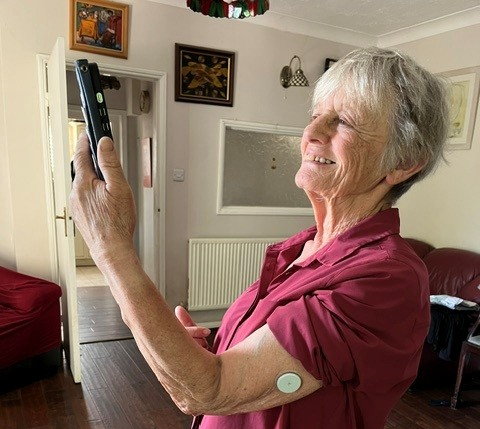
Read Alison's review of a CGM for her prediabetes (she is pictured).
What is a CGM?
A CGM is a small sensor that you attach to your body that sits under your skin day and night. It reads your sugar levels, known as your glucose levels.
This information is then sent to your mobile or another device which is sometimes called a reader. This can give you an idea about how food and activity affects your sugar levels.
Why do people with diabetes use a CGM?
Glucose is a type of sugar that you get from food and drink. Your blood sugar levels go up and down throughout the day. For people living with diabetes, changes in blood sugar levels are larger and happen more often than in people who don’t have diabetes.
So some people with diabetes check their own blood sugar levels by doing a finger prick test or using a CGM.