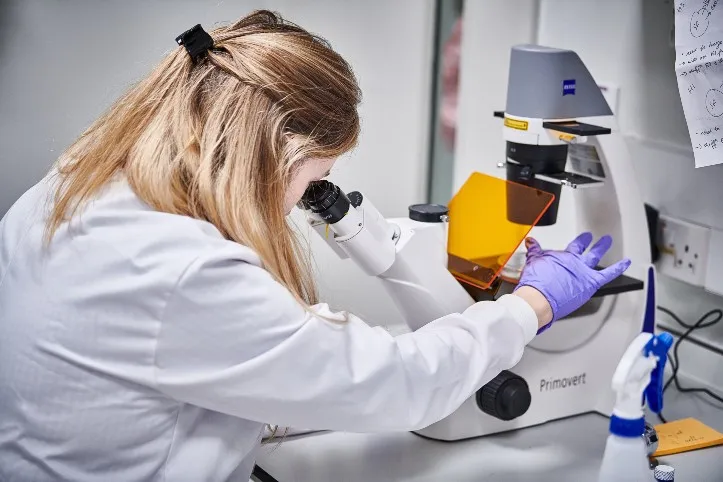
We take a look at some of the exciting diabetes research developments announced in February 2026, and what the findings could mean for people living with or affected by diabetes.
In this month's article:
- A medieval mixture to fight antibiotic resistant bacteria in foot ulcers
- Research findings support SGLT-2 inhibitors as a first-choice type 2 treatment
- Real-world study strengthens evidence for teplizumab in early type 1 diabetes
A medieval mixture to fight antibiotic resistant bacteria in foot ulcers
Researchers we funded at the University of Warwick have found that a medieval remedy can fight bacteria involved in persistent wound infections.
This suggests that the mixture could help inspire new treatments for hard‑to‑heal wounds, including those seen in diabetic foot ulcers that don’t always respond to the antibiotics we have today.
The remedy, called Bald’s eyesalve, is a simple mix of garlic, onion, wine and bile salts which Dr Freya Harrison and team unearthed in a 1,000‑year‑old medical text.
Many modern antibiotics come from natural sources, so the team revisited historical remedies to spark new ideas. With antibiotic resistance on the rise across the world, finding new options is urgent.
In their earlier Diabetes UK-funded research, they showed that the mixture can kill antibiotic‑resistant bacteria taken from chronic wounds, including in sticky layers called biofilms, which are especially common in diabetic foot ulcers.
In their latest study, the researchers wanted to understand how the mixture works inside bacterial cells. They tracked how bacteria in the lab responded when exposed to the remedy.
They found that the mixture can attack bacteria on multiple fronts. It breaks down the protective surfaces of bacteria, reduces the toxins they produce, and slows the early steps of biofilm formation. It also interferes with basic building processes inside the bacteria, switching off genes that help bacteria stick to tissues and cause harm.
In long‑term tests, bacteria developed resistance to standard antibiotics but because the medieval mixture works in many different ways, bacteria struggled to adapt to it.
Infections like those seen in diabetic foot ulcers often involve several different bacteria, and antimicrobial resistance is common, raising the risk of poorer outcomes if treatment fails.
Understanding how the mixture works gives researchers a clearer direction for creating future treatments inspired by the medieval recipe that could better tackle these difficult infections and protect people with diabetes from their serious harm.
As with any early laboratory research, there is still a lot to learn before researchers can explore its safety and effectiveness in people.
Research findings support SGLT-2 inhibitors as a first-choice type 2 treatment
Researchers have found evidence that the type 2 diabetes drug empagliflozin – an SGLT2 inhibitor – could save thousands of lives each year.
This supports new type 2 treatment guidelines from the National Institute of Health and Care Excellence (NICE) that recommend earlier access to these drugs.
SGLT-2 inhibitors are a type 2 drug that work by lowering blood sugar levels.
Previous studies have shown that SGLT-2 inhibitors protect people with type 2 diabetes against kidney and heart damage, and early death. But participants in these studies haven’t represented the full diversity of people living with type 2 diabetes. This has limited our understanding of how SGLT-2 inhibitors work in everyone with type 2.
In a study published in BMJ Open Diabetes Research & Care, researchers at UCL and the London School of Hygiene & Tropical Medicine looked at electronic health records data on around 60,000 people with type 2 diabetes in the UK from diverse backgrounds. They had either been prescribed empagliflozin or another blood sugar-lowering drug, a DPP-4 inhibitor.
The researchers found that people with type 2 diabetes who’d taken empagliflozin were 24% less likely to die early over an average of three years compared to those given a DPP-4 inhibitor.
Around three million people use type 2 diabetes medications in the UK. Scaling up, this finding indicates that 20,000 deaths from type 2 and its harmful complications could be prevented each year using SGLT-2 inhibitors.
The results of the research informed new NICE guidance that SGLT-2 inhibitors should be used as first-choice type 2 treatments, alongside metformin. This marks an important shift in type 2 diabetes care, recognising that the condition is complex and individual – with each person needing the right treatment for them, at the right time.
Real-world study strengthens evidence for teplizumab in early type 1 diabetes
The first study of the immunotherapy teplizumab outside of a research setting adds new evidence that its benefits can carry over into everyday care for people in early stages of type 1 diabetes.
Teplizumab became the world’s first type 1 diabetes immunotherapy when it was approved in the US in 2022. It works by targeting and weakening the immune attack that causes type 1 diabetes. More recently, it has been licensed in the UK and there’s currently a review underway to decide if it should be made available through the NHS.
Teplizumab is given to people with early-stage type 1 diabetes, before too many insulin-making beta cells have been destroyed, and before symptoms develop or insulin therapy is needed. In clinical trials, teplizumab slowed down the progression of type 1 to give people an extra three years on average before they needed insulin therapy.
In this new US study, researchers wanted to see whether those benefits are being replicated in the real-world. They followed 30 children and adults with early-stage type 1 diabetes who received teplizumab at a specialist clinic, comparing them with 10 people at the same stage of type 1 who didn’t receive the treatment.
Two to six months after treatment, people given teplizumab showed stable or improved blood sugar levels. Whereas those who didn’t receive it tended to show higher blood sugar levels over time.
Around 13% of those treated progressed to full-blown type 1 diabetes during follow-up, compared with 30% of those who did not receive teplizumab. No one who progressed to full type 1 developed diabetic ketoacidosis (DKA).
The study also explored what was happening in the immune system. Teplizumab reduced the specific “attacker” immune cells that target beta cells.
This reduction was linked to higher C-peptide levels – a marker of the body’s own insulin production – suggesting the treatment helped to protect and preserve beta cells. Researchers say tracking these immune changes in future could help identify who is responding best to treatment.
The side effects of teplizumab were similar to previous clinical trials and mostly mild, including temporary changes in white blood cell counts, nausea and rash.
We want to see effective immunotherapies like teplizumab made available to those who could benefit, marking a shift towards treatments that target the root cause of type 1 diabetes.
And these findings show that the life-changing benefits of teplizumab seen in trials can translate into real-world care. Combined with early screening, immunotherapies like this could buy people precious extra time without insulin and prevent emergency diagnoses.