Page saved! You can go back to this later in your Diabetes and Me Close

Rei’s story: I would love to see attitudes to women with gestational diabetes change

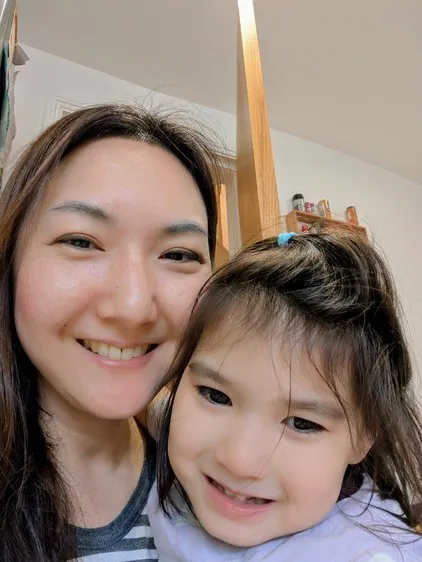
Woman pictured with her daughter smiling

Rei

I received a letter stating that I was at an increased risk of developing type 2 diabetes, and that I’d have to book my HbA1c annually, and then it was entirely up to me as they don’t send reminders every year.

Rei, who is a researcher for a national children’s charity, lives in Cambridge with her husband and two children. She shares her experience of being diagnosed with gestational diabetes (GDM) during both of her pregnancies at the age of 35 and 37.

Next Review Date
Content last reviewed
09 February 2026
Next review due
09 February 2031

Diagnosis

My higher risk

I was 24 weeks pregnant with my eldest son when the glucose tolerance test showed abnormal results. This test was carried out routinely during my pregnancy as my ethnic group was at higher risk of developing gestational diabetes and I also had a family member – a maternal grandparent – with type 2 diabetes.

I was utterly shocked – as were my husband and friends, as I’d had no health issues prior to this, exercised regularly and had a normal BMI.

Before any of this, I only really knew the term ‘gestational diabetes’, but suffice to say, I knew next to nothing about what it entailed. I also experienced gestational diabetes during my second pregnancy. 

Emotions

Worry set in

At diagnosis, I was very upset. I was given a leaflet with information and my first meeting with the gestational diabetes team was arranged for a week later. Until the appointment though, I felt I had no real information on what to eat and was really worried about how that might affect my baby.

"The advice I was given as part of the gestational diabetes diet was quite complex, including eating foods with a lower GI (Glycaemic index). Many people misunderstand that it’s just about ‘healthy eating’. It’s more than that, and I was quite upset about the lack of knowledge from the people around me."

My husband was very supportive and, as a scientific-minded person, took a very evidence-based approach. While he wasn’t one for cooking, he did make a lovely effort for my birthday – finding me a lovely cake made by a lady who was also a diabetes specialist.

Looking back, while I eventually got all the information I needed in my first appointment, I feel like there needs to be more guidance around gestational diabetes in early pregnancy (before 24 weeks). As I had gestational diabetes the first time around, I suspected this might also be the case for my second pregnancy. Since I had the kit, I was able to measure my blood glucose level from the start of my second pregnancy, and could see that as early as 8 weeks, my blood glucose was over the threshold.

I was advised by one healthcare professional that at this stage a gestational diabetes diet wasn’t necessary however, I wanted to make sure I took every precaution and adjusted my diet. I also received a second opinion a bit later and was advised that those changes wouldn’t hurt. It did make it a little harder, as it meant that instead of the final 16 weeks of pregnancy, I had the diet for much longer. 

Journey with diabetes

Understanding my risk of type 2 diabetes

Following my last pregnancy, I received a letter stating that I was at an increased risk of developing type 2 diabetes, and it told me that I’d have to book my HbA1c annually, and then it was entirely up to me as they don’t send reminders every year.

I have been managing to get my HbA1c at least once a year, not quite 12 months apart each time. Over that time, I’ve noticed it creeping up to just below figures that would indicate prediabetes (42 mmol/mol), despite me continuing a balanced diet and exercising.

Changes to diet

I found the diet tricky during my pregnancy. I was able to control my appetite and sugar cravings, although it was hard at times. However, in my mind, not being able to have juice, certain fruits, or sweets wasn’t the worst and I could just persevere. 

In an ideal world, I feel that changes are needed within the food industry. During my pregnancies, I felt there was very little I could buy and eat on the go. 

"I also think cost is a huge barrier to managing gestational diabetes or preventing type 2 diabetes, as some of the food choices they’d like you to make are just not affordable. Money shouldn’t be a barrier to managing a health condition."

I did find the things I was advised to eat didn’t always agree with my digestive system – and often made me feel nauseous, bloated and sick. I went back and forth with my diabetes team and GP, who offered tips and prescriptions, but throughout the second pregnancy, I struggled with it even more. During both pregnancies, my blood glucose levels were managed purely by diet and metformin or insulin weren’t deemed necessary in my case.

Having to cook every single meal, or most of the meals, was challenging for a mother with a toddler who’s a fussy eater. I found myself cooking multiple meals – one for myself, one for my son, and another for my husband.

"At one stage in my first pregnancy, I remember being really upset when I was cooking, because I didn’t want to eat what I was meant to be eating."

This was back in 2020, when we were all coping with the effects of COVID. Gestational diabetes can have such an impact on your mental health, and this only felt exacerbated by not being able to see friends, being in and out of lockdowns, and being restricted with caffeine, alcohol and sugar.

That feeling of judgement

Often during my pregnancies, I did experience stigma. Some of it felt like lectures, completely unsolicited advice or the assumption that I had very bad eating habits. There are some really unkind and incorrect assumptions about what kind of people have diabetes, no matter what type.

My medical team were wonderful, but I do remember a GP I had a telephone consultation with just assumed I had weight issues and poor diet during our conversation.

"I would love to see attitudes to women with gestational diabetes change. I find the discourse around pregnant women problematic, and women should never be ashamed for having gestational diabetes."

Within the healthcare setting, I’ve felt an attitude of ‘this is for your baby, just suck it up’ when relaying my struggles throughout my pregnancies."

"It’s not about whining or lacking strength, it’s just that we have a unique set of needs during our pregnancies and it can be incredibly tough – so love, patience and kindness in all settings is paramount."

That would very much be my advice to others in a similar situation – hang in there and find your community. Be comfortable with setting your boundaries with others and connect with people who truly understand and support you.

Watch Rei's film about her second pregnancy on our gestational diabetes page.

________________________________________________________________________________________________________________________________

Reach out for support

If you are affected by the topics highlighted within this story or other stories on our website, you can access support from our helpline team on 0345 122 2399, Mon- Fri, 9am- 6pm, or email helpline@diabetes.org.uk.

You can join our free forum – to connect with others affected by diabetes (minimum age 13). For more information, see our forum FAQs.

For those aged 11-25 living with type 1 diabetes, check out our youth programme Together Type 1 for a supportive community of people who understand what it’s really like juggling the ups and downs of life with diabetes


Back to Top
Brand Icons/Telephone check - FontAwesome icons/tick icons/uk