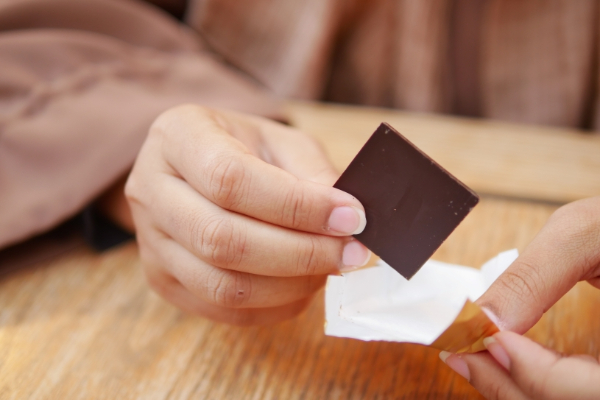
There’s a myth that you can't eat chocolate if you have diabetes. But you can eat chocolate, just in moderation and not too often.
On this page we cover:
- Can I eat diabetic chocolate?
- Can I treat a hypo with chocolate?
- How to enjoy chocolate as part of a balanced diet
Try not to eat a lot in one go as it affects your blood sugar levels. If you snack on chocolate regularly it may start to increase your cholesterol levels and make it more difficult to manage your weight.
When you have diabetes, it's especially important to try and follow a healthy and balanced diet as part of your overall health care. This includes being mindful of the types of snacks you choose and how often you have them.
This will help to manage your diabetes and reduce your risk of long-term complications.
Chocolate and your health
Chocolate is a treat food and sits outside of the Eatwell Guide because it's high in energy, sugar and saturated fat, even in small portion sizes. If you eat these foods frequently and in large amounts this could lead to unintentional weight gain making it more difficult to manage your blood sugar, blood cholesterol and blood pressure.
If your personal health goal is towards achieving or maintaining a healthier weight, it’s important to check how much and how often you're eating high fat, high sugar foods like chocolate.
The added sugar in chocolate counts as ‘free sugars’ which we all need to keep an eye on whether you are at risk of diabetes, live with diabetes or don't live with diabetes. On average chocolate contains 50g sugar per 100g.
We should all limit our free sugar intake to 30g a day for adults and children over the age of 11 (30g is equal to 7 cubes or 7 teaspoons of sugar). This is especially important for people living with diabetes, who are at higher risk of dental problems.
Chocolate typically contains cocoa butter and additional fats or oils like palm oil and shea butter. These ingredients are high in saturated fats, linked to raised cholesterol and heart disease. You can check how much chocolate treats can add up to by checking your food labels.
Enjoying chocolate as a special treat
As a nation we really enjoy our chocolate, perhaps more occasionally than as a special rare treat. Chocolate tends to be put in a prime position in shops and put on special offer, which increases our temptation even more.
To enjoy chocolate in moderation, try to rethink your portion sizes. It’s not an everyday food but can be a nice way to celebrate.
Celebrating with others and sharing the treat can help prevent you from 'just having one more piece' and eating more than you planned to.
Sometimes we reach for treat foods like chocolate when we feel low or need comforting, it’s important to think about what may be driving this feeling. Take a look at our articles on emotional eating.
That said, celebrations such as Easter and Christmas only come once a year, so don’t worry about the odd one or two high blood sugar levels as these will not affect your long-term health and diabetes management.
Can I eat ‘diabetic’ chocolate?
To describe a food as “diabetic” is against the law. This is because there is no evidence that these products offer any special benefit over eating healthily. These foods can also sometimes have a laxative effect.
We do not recommend 'diabetic' chocolate. Diabetic chocolate is just as high in saturated fat and calories as ordinary chocolate, it can still raise blood sugar levels and is often more expensive than regular chocolate.
It's best to choose regular chocolate and eat a smaller portion.
Can I treat a hypo with chocolate?
Chocolate is not good for treating hypos because the fat slows down the absorption of sugar, so they don't work quickly enough. Here's a reminder on which treatments will work best if you have a hypo.
Children and chocolate
Birthday parties and festive celebrations such as Easter and Christmas are a fun time for children.
The same government healthy eating guidelines apply, that all children limit their daily free sugar intake to:
- 19g, equal to 5 cubes or 5tsp of sugar, for children aged 4 to 7
- 24g, equal to 6 cubes or 6tsp of sugar, for children aged 7 to 10
Remember if you or your child carb counts, check the chocolate label so that you can calculate how many carbs have been eaten and adjust insulin doses accordingly.
How to enjoy chocolate as part of a healthy, balanced diet
- Instead of 'diabetic' chocolate, try choosing good-quality dark chocolate (for example, with around 70% cocoa or higher ). It has a stronger taste than milk chocolate, so you may find you eat a bit less.
- Decide how much you are going to eat and put the rest of the chocolate away, out of reach. This should help prevent you from eating more than you planned to.
- If you carb count, read the labels for carb content to help you decide your insulin dose.
- Try making your own hot chocolate at home. Mix cocoa powder and hot water with a little sweetener to reduce the sugar of your hot chocolate or choose low sugar and calorie versions from supermarkets.
Your top chocolate tips
Our supporters share their top tips for eating chocolate, whether you live with diabetes or not.
Noel:
“If you crave chocolate, buy a quality bar with a high cocoa content, break it into squares and store it in your fridge or freezer. Then when you really want an occasional treat, help yourself to a square. Because it’s cold, it takes longer to melt in your mouth.”
Ella:
"Do remember to count the carbs – most packages have info on the back."
Rachel:
"Don't wrap your child up in cotton wool – let them carry on as normal and just have eyes in the back of your head for signs of a high or low as the little monsters don't always tell you if they're too busy having fun."