If you're planning on throwing a Halloween party or lunch for family or friends this year, use our recipes below for your spooky spectacular.
We also have tips for enjoying Halloween (Saturday, 31 October 2026) as part of a healthy, balanced diet. Plus information about trick or treating and managing diabetes. And advice for parents and carers of children living with diabetes.
So dust off your broomstick and get carving those pumpkins. Speaking of which.
Can you eat pumpkin if you have diabetes?
Yes you can eat pumpkin if you have diabetes. It contains carbohydrate but that’s no reason to avoid it.
Pumpkin is a source of fibre and provides a range of vitamins and minerals for overall health. An 80g serving counts as one of your five a day too.
Pumpkin has a medium glycaemic index (GI), which means it raises blood sugar levels at a moderate rate rather than quickly.
However the amount of pumpkin you eat has the biggest effect on blood sugar levels, so consider portion size and try not to eat a large portion all at once. Also, be mindful of sweet foods made with pumpkin, such as pumpkin pie as these foods can contain added sugar. Pumpkin can be roasted, steamed or turned into soup for a nutritious choice. Don’t waste the seeds either – roast them for a crunchy snack or topping.
Our recipes for Halloween
From spine-chilling snacks to sinisterly sweet centrepieces, there's a creepy dish for every course.
Scary pumpkin soup and tombstone bread
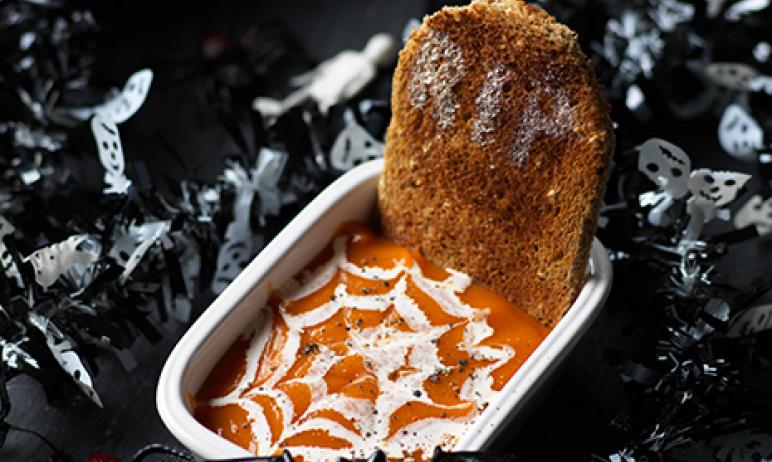
Warm up with this tasty pumpkin soup, topped with a yoghurt spider web and served with wholemeal toast if you like. Pumpkin, red lentils and tomatoes come together to make a nutritious soup that provides four of your five a day, as well as fibre and protein.

Homemade popcorn
As a healthy alternative to trick or treat sweets, why not hand out bags of this tasty homemade popcorn? Ours is lower in sugar and salt than many shop-bought options. And you can tailor it to your taste by adding nutmeg or cinnamon for a seasonal twist.
Mini filo pumpkin pies
Spiced pumpkin is piled into filo baskets and topped with pumpkin seeds and orange zest. There's nothing frightening about these mini filo pumpkin pies.
Ogre's eyeballs
These bite-size mini ogre's eyeballs are a perfect appetizer to serve at your Halloween party. They're quick to make, and you can use minced fish for the meatballs instead of minced turkey if you prefer.
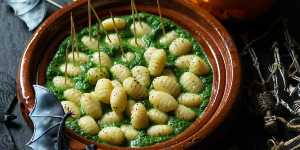
Witchetty grubs in swamp juice
Potato gnocchi dotted with poppy seeds make convincing wichetty grubs to pass around as a tasty canape at your party.
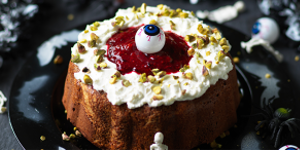
Bleeding heart Halloween cake
Beetroot-based chocolate sponge piled with fruit, with a low-fat cream cheese frosting. This bleeding heart Halloween cake makes a gruesome centrepiece.

Halloween biscuits
And finally, why not spice up Halloween with these Halloween biscuits? These have less sugar than traditional northern Parkin biscuits but are full of flavours of ginger and cinnamon. You can cut them into any ghoulishly scary shapes you choose.
Managing diabetes at Halloween parties
If you live with diabetes and you’re hosting your own ghoulish get-together with friends or family, use our tips below to help with your diabetes management.
Or, you could send these tips to friends or relatives hosting a party which you’re going to.
- Decide what time you're going to be serving meals and snacks to help you plan ahead and manage your blood sugar levels.
- Include a variety of foods such as wholegrain carbohydrates, vegetables, fruits, beans and pulses, plain nuts and seeds, unsweetened dairy and other sources of lean protein. This can help you enjoy a healthy balanced plate
- Choose water or sugar-free drinks instead of sugary drinks which can raise your blood sugar levels.
- It’s a myth you can’t have sweets and chocolate if you have diabetes. Small amounts are fine as part of a healthy diet. For example, you could eat mini chocolate bars or small bags of sweets rather than big ones. Instead of diabetic chocolate, try choosing good-quality dark chocolate (for example, with around 70% cocoa or higher). It has less sugar than milk chocolate and a stronger taste, so you may find you eat a bit less.
Keeping children safe – advice for parents
For tips and advice on managing your child’s blood sugar levels over Halloween, speak to your child’s healthcare team.
- If your child is going trick-or-treating, make sure they have a balanced meal before they go out – something with starchy carbohydrates. This will give them long-lasting energy and help prevent hypos. They’re also less likely to eat all the sweets while they’re out. Having sweets with a meal – rather than on their own – can help to reduce the impact on blood sugar levels.
- If your child is going out with friends and other adults – make sure you child and someone who is going with them knows to manage their diabetes while out. For example, knowing how to recognise the signs of a hypo and how and treat a hypo if one happens, and knowing when they would need insulin and how much to take.
- If you child is wearing a costume, make sure they can access their pump or glucose sensor to check blood glucose and inject insulin easily.
- Extra foods and activity can affect blood sugar levels in different ways so encourage your child to check their sugar levels more often.
- If your child has type 1 diabetes, make sure they have their usual hypo treatments with them and a follow-on snack like a cereal bar or piece of fruit. Although your child may be collecting sweets and chocolates, some of them won’t work quickly enough to treat a hypo (unlike fast-acting carbohydrates like jelly babies, glucose tablets or pure orange juice).
- Let your child know not to eat chocolate and sweets labelled ‘diabetic’ (they can cause an upset stomach and aren’t recommended).